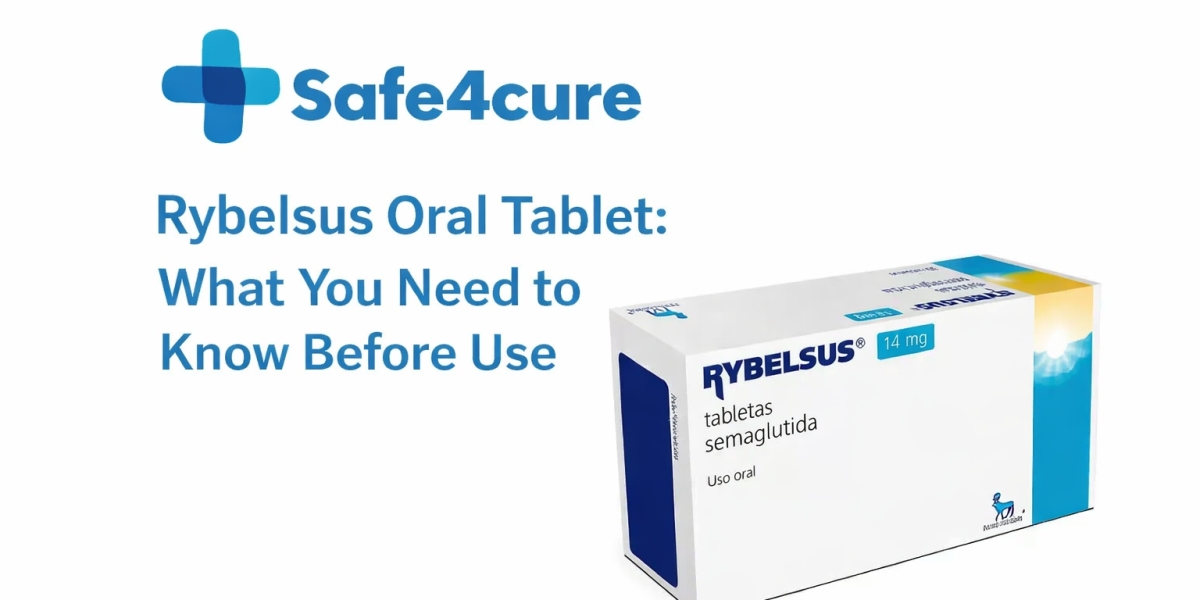

Managing type 2 diabetes has traditionally involved frequent injections, especially when using advanced therapies like GLP-1 receptor agonists. For many patients, this created a barrier to consistent treatment. However, the introduction of Rybelsus (semaglutide) has significantly changed this experience. As the first oral medication in its class, it eliminates the need for injections while maintaining strong clinical effectiveness.
Importantly, Rybelsus oral tablet treats type 2 diabetics with weight loss, offering a dual benefit that supports both blood sugar control and improved body weight. This makes it an appealing option for individuals looking for a more convenient and comprehensive approach to diabetes management.
That said, starting any new medication requires proper understanding. From how it works in the body to the precautions needed for optimal absorption, being well-informed ensures both safety and effectiveness.
What is the Meaning of Rybelsus?
Rybelsus is the brand name for semaglutide, a prescription medication used to improve blood sugar control in adults with type 2 diabetes mellitus. Manufactured by Novo Nordisk, it holds the distinction of being the first glucagon-like peptide-1 (GLP-1) receptor agonist available in a daily oral tablet form.
The name itself represents a breakthrough. While injectable versions of semaglutide (like Ozempic and Wegovy) gained fame for weight loss and glucose control, it was designed specifically to bypass the stomach’s harsh digestive enzymes, a challenge scientists spent years trying to solve. It utilises a unique absorption enhancer called SNAC (sodium N-(8-[2-hydroxybenzoyl] amino) caprylate) that allows the semaglutide molecule to survive the stomach environment and enter the bloodstream effectively.
Uses of Rybelsus Oral Tablets
To improve glycemic control: It is used alongside diet and exercise to lower blood sugar.
As an adjunct therapy, it can be used alone (if metformin is not tolerated) or in combination with other diabetes medications such as metformin, sulfonylureas, or SGLT-2 inhibitors.
To reduce cardiovascular risk: In patients with type 2 diabetes and established heart disease, it is indicated to reduce the risk of major adverse cardiovascular events (such as heart attack or stroke).
It is important to note that it is not for type 1 diabetes. It is strictly indicated for type 2 diabetes management.
How Does It Work?
To appreciate the benefits, you must understand the mechanism. These oral tablets mimic a natural hormone in your body called GLP-1. It works on three levels to control blood sugar:
The Pancreas: It stimulates the pancreas to release insulin only when blood sugar levels are high. This reduces the risk of hypoglycemia (low blood sugar) compared to other medications like insulin.
The Liver: It reduces the amount of glucose (sugar) your liver releases into your bloodstream.
The Stomach: It slows down gastric emptying. This means food moves more slowly from your stomach to your small intestine, which helps prevent sharp spikes in blood sugar after meals.
Benefits of Rybelsus Oral Tablet
Needle-Free Convenience: For patients with needle phobia or dexterity issues, the oral tablet format is a game-changer.
Significant A1C Reduction: Clinical trials have shown that it can reduce hemoglobin A1C by up to 1.5%, depending on the dosage. If you are looking for Rybelsus oral tablet for lowering A1C levels, it is considered one of the most potent oral medications available.
Weight Loss: Unlike insulin or sulfonylureas (which often cause weight gain), Rybelsus promotes weight loss. It suppresses appetite and helps patients feel fuller for longer.
Cardiovascular Protection: It has proven benefits for heart health in high-risk patients.
Consistent Efficacy: Because it is taken daily, it helps maintain stable blood sugar levels throughout the day.
Rybelsus Oral Tablet Side Effects
No discussion is complete without a thorough look at the Rybelsus Oral Tablet Side Effects: What You Need to Know Before Use. Side effects are most common when you first start the medication or during the Rybelsus(semaglutide) oral tablet dose escalation schedule.
These usually subside after a few weeks as your body adjusts:
Nausea: This is the most frequent complaint. Taking the tablet on an empty stomach can sometimes exacerbate this initially.
Diarrhea or Constipation: Gastrointestinal (GI) distress is common as the medication slows down digestion.
Vomiting and Abdominal Pain: These are often linked to the nausea.
Dosage of Rybelsus
The dosage of medication follows a specific escalation schedule designed to minimise gastrointestinal side effects.
Starting Dose: 3 mg once daily for 30 days. This is not a therapeutic dose; it is intended to help your body tolerate the medication.
Maintenance Dose: After 30 days on 3 mg, you increase to 7 mg once daily.
Therapeutic Dose: If additional glycemic control is needed after at least 30 days on 7 mg, your doctor may increase the dose to 14 mg once daily.
It is vital to adhere strictly to the Rybelsus oral tablet dose escalation schedule. Jumping to a high dose too quickly can result in severe nausea and vomiting.
Can You Take Rybelsus Oral Tablet with Food?
This is one of the most critical aspects of the medication. The answer is nuanced.
No, you cannot take the Rybelsus oral tablet with food. The absorption of this is highly sensitive to changes in pH. To work effectively, it must be taken:
On an empty stomach—immediately upon waking.With no more than 4 ounces of plain water (about half a cup). You must then wait at least 30 minutes before eating, drinking, or taking any other oral medications.
If you take it with food, or even with coffee or other liquids, the absorption enhancer (SNAC) fails to work correctly. This can render the medication ineffective. If you have taken it with food, skip that dose and resume the next day; do not double up.
Pros and Cons
To help you weigh your decision, here is a summary of the pros and cons:
Pros
Needle-free: Eliminates injection anxiety.
Weight loss: Promotes significant weight reduction.
Effective A1C reduction: Comparable to injectable GLP-1s.
Cardioprotective: Reduces heart attack and stroke risk.
Once-daily dosing: Easy to incorporate into a morning routine.
Cons
Strict dosing rules: The 30-minute fasting window is non-negotiable.
GI side effects: Nausea and diarrhea are common, especially during dose escalation.
Cost: It can be expensive without insurance coverage.
Not for Type 1: Only for Type 2 diabetes.
Contraindications: Cannot be used if you have a history of certain thyroid cancers.
Is Rybelsus Oral Tablet Better Than Insulin?
Whether the Rybelsus oral tablet is a better option than insulin depends on the stage of a patient’s type 2 diabetes.
For Early to Moderate Type 2: Rybelsus is often preferred over insulin because it carries a lower risk of hypoglycemia (dangerously low blood sugar) and can promote weight loss rather than weight gain. In fact, semaglutide shots are used to treat type 2 diabetes while supporting weight reduction.
For Advanced Type 2: When diabetes has progressed over 15–20 years and the pancreas produces very little natural insulin, Rybelsus alone may not be sufficient. In such cases, insulin is superior because it directly replaces the insulin the body cannot make.
Rybelsus and insulin are not mutually exclusive; in some situations, doctors prescribe them together. However, if you want to avoid needles and your pancreas still functions adequately, Rybelsus is often the preferred choice.
Safety Considerations
Safety is paramount when considering this medication. Here are the key safety considerations and Rybelsus oral tablet warnings and precautions:
Thyroid C-Cell Tumors: Rybelsus carries a "Black Box" warning—the FDA’s strictest warning—regarding the risk of thyroid C-cell tumours. Do not take. If you or a family member has ever had medullary thyroid carcinoma (MTC) or if you have Multiple Endocrine Neoplasia syndrome type 2 (MEN 2).
Pregnancy: Rybelsus should be discontinued at least two months before a planned pregnancy due to potential harm to the fetus.
Dehydration: Because of the risk of vomiting and diarrhea, patients must stay hydrated to avoid kidney injury.
Sulfonylureas Interaction: If you take Rybelsus with a sulfonylurea (like glipizide or glimepiride), the risk of hypoglycemia increases. Dosage adjustments may be needed.
Precautions
Before starting Rybelsus, you should discuss your medical history with your doctor, specifically:
- If you have a history of pancreatitis.
- If you have diabetic retinopathy.
- If you have gastroparesis (stomach paralysis), Rybelsus medication slows digestion, which could worsen this condition.
- If you have kidney or liver disease.
Testimonials
Real-world experiences often help patients visualise the journey.
*"I was terrified of needles. When my doctor suggested a GLP-1, I almost cried. Then she told me about Rybelsus(semaglutide). The first week on 3mg was tough with the nausea, but I followed the Rybelsus oral tablet dose escalation schedule exactly. Now I’m on 7mg, and my A1C dropped from 8.4 to 6.9 in three months. The trick is to take it the second you wake up and set a timer for 30 minutes before coffee."* — David M., Texas
"I was on insulin for two years and gained 20 pounds. Switching to Rybelsus wasn't just about the needle; it was about my weight. I’ve lost 15 pounds, and my blood sugar is steady. You have to be strict about not eating in the morning, but it’s worth it for the results." — Linda K., Florida
FAQs
Q: What happens if I miss a dose?
A: If you miss a dose, skip it and take your next dose as scheduled the following morning. Do not take an extra dose to make up for the missed one.
Q: Can I drink alcohol while taking Rybelsus tablets?
A: Moderate alcohol is usually okay, but alcohol can increase the risk of hypoglycemia (especially if you are also on insulin or sulfonylureas). It can also exacerbate gastrointestinal side effects like nausea.
Q: How long does it take to see results?
A: While you may see some appetite suppression immediately, significant Rybelsus oral tablet for lowering A1C levels is usually seen after 3 to 6 months, once you are on the therapeutic dose (7mg or 14mg) for a sustained period.
Q: Is Rybelsus the same as Ozempic?
A: They contain the same active ingredient (semaglutide). Ozempic is an injectable (weekly), while Rybelsus is an oral tablet (daily). They are considered therapeutically similar, but the dosing and administration are vastly different.
The "30-Minute Rule" and Absorption
A newer area of research focuses on the importance of the "30-minute window." Recent pharmacokinetic studies have shown that if a patient eats, drinks, or takes other medications even 25 minutes after taking Rybelsus, absorption drops by nearly 30%.
Moreover, interesting new data suggests that the volume of water matters. Drinking more than 4 ounces of water can dilute the absorption enhancer SNAC, causing the semaglutide to degrade before it crosses the stomach lining. This highlights that adherence to the specific morning routine is just as important as adherence to the medication itself for achieving the full benefits of Rybelsus oral tablets.
Final Thoughts
It represents a monumental shift in diabetes care. It offers the potency of a GLP-1 agonist with the convenience of a pill. However, it demands discipline. If you are someone who can commit to waking up, taking the pill with minimal water, and waiting half an hour for breakfast, the benefits of semaglutide, including significant A1C reduction, weight loss, and cardiovascular protection, are substantial.
Understanding Rybelsus Oral Tablet Side Effects: What You Need to Know Before Use is not about scaring you away from treatment; it is about preparing you for success. By managing the initial gastrointestinal side effects through the proper dose escalation schedule and respecting the strict administration rules, you can maximise the efficacy of this powerful medication.