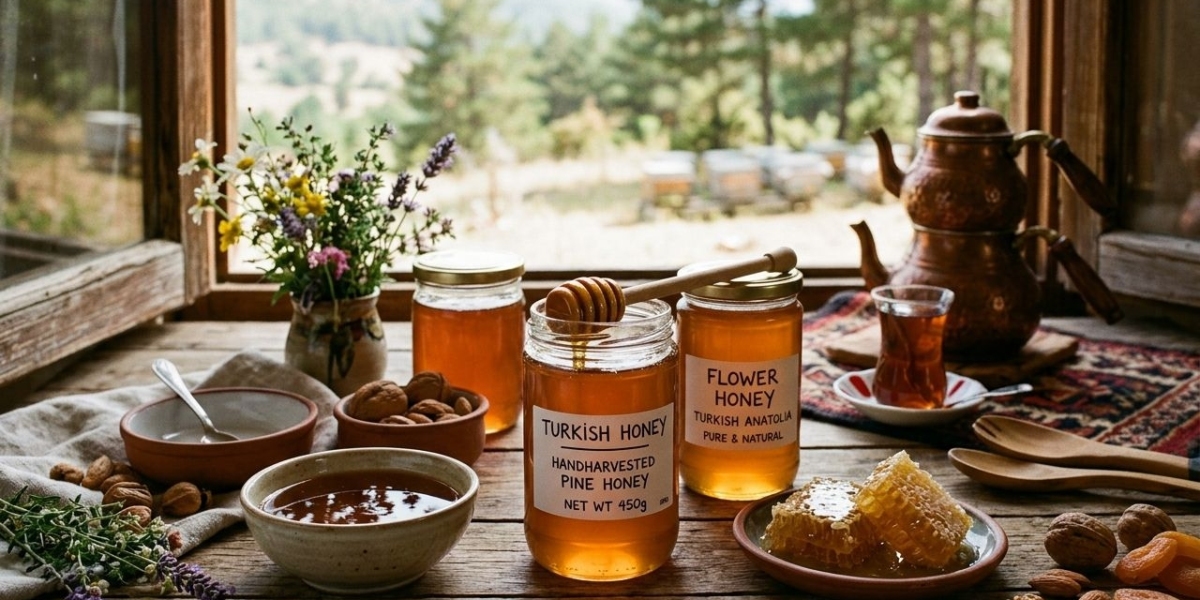

Turkey is one of the world’s leading honey-producing countries, thanks to its diverse flora and favorable climate. The country’s unique geographical location, bridging Europe and Asia, allows for a wide variety of plants, herbs, and flowers. This diversity gives Turkish honey its distinct taste, aroma, and medicinal properties.
Unlike many commercial honeys that are blended or processed, Turkish honey is often harvested using traditional methods, ensuring that it remains pure and rich in nutrients. Beekeepers in Turkey take great care to preserve the natural enzymes, antioxidants, and minerals that make honey not just a sweetener, but a natural remedy.
The Origins and Production of Turkish Honey
Natural Flora and Bee Varieties
Turkish honey derives its unique flavor from the country’s varied flora. From wild thyme in the Aegean region to pine forests in the Mediterranean, each area produces honey with distinct characteristics. The main floral sources include:
- Thyme: Known for its aromatic, slightly spicy flavor.
- Pine: Dark and rich, often considered a medicinal variety.
- Chestnut: Bitter-sweet honey with high antioxidant content.
- Clover: Mild and light honey suitable for daily consumption.
Bees in Turkey are predominantly of the Anatolian honeybee variety, which is adapted to local conditions and contributes to the purity and quality of the honey.
Traditional Harvesting Methods
One of the reasons Turkish honey is highly prized is the traditional harvesting methods. Most Turkish honey is collected using environmentally friendly practices:
- Manual Extraction: Beekeepers carefully remove honeycombs to avoid harming the bees.
- Minimal Processing: Honey is filtered to remove impurities but is rarely pasteurized, preserving its natural enzymes.
- Sustainable Beekeeping: Turkish beekeepers often rely on small-scale operations, supporting biodiversity and reducing environmental impact.
These practices ensure that Turkish honey retains its authentic flavor and health benefits.
Types of Turkish Honey
Turkish honey is not a single product but a variety of honey types with different tastes, colors, and health properties. Here are some popular types:
1. Pine Honey (Çam Balı)
Pine honey is dark, thick, and slightly bitter. It is produced primarily in the Aegean and Mediterranean regions and is valued for its medicinal properties. Pine honey contains high levels of antioxidants, making it beneficial for immune support and reducing inflammation.
2. Thyme Honey (Kekik Balı)
Thyme honey is aromatic and has a distinctive herbal flavor. It is rich in antibacterial compounds and is commonly used to treat respiratory issues, sore throats, and digestive problems.
3. Chestnut Honey (Kestane Balı)
Chestnut honey has a strong, slightly bitter taste and is dark in color. It is rich in minerals such as iron and calcium, making it particularly beneficial for blood health and bone strength.
4. Clover Honey (Yonca Balı)
Clover honey is lighter in color and flavor, making it suitable for everyday consumption. It has mild antibacterial properties and is often used in tea, desserts, or as a natural sweetener for children.
5. Multi-Flower Honey (Çiçek Balı)
This type of honey is produced from nectar collected from multiple types of flowers. Its flavor and color vary depending on the season and region, offering a balanced taste suitable for a wide range of culinary uses.
Health Benefits of Turkish Honey
Turkish honey is not only delicious but also packed with nutrients that offer numerous health benefits:
1. Boosts Immunity
Thanks to its high antioxidant and antibacterial content, Turkish honey strengthens the immune system and helps the body fight infections. Darker varieties, like pine and chestnut honey, are especially effective.
2. Supports Digestive Health
Certain types of Turkish honey contain enzymes that aid digestion. Thyme and multi-flower honey are often used to soothe stomach issues, reduce bloating, and improve gut health.
3. Promotes Heart Health
Regular consumption of Turkish honey can improve cardiovascular health. Antioxidants in honey help reduce cholesterol levels and improve blood circulation. Pine and chestnut honey are particularly noted for their heart-protective benefits.
4. Provides Natural Energy
Honey is a natural source of carbohydrates, primarily glucose and fructose. This makes Turkish honey an excellent choice for a quick energy boost before workouts or long workdays.
5. Helps Skin and Wound Healing
Historically, Turkish honey has been used in traditional medicine for wound healing and skin care. Its antibacterial properties help prevent infections, while its moisturizing qualities nourish the skin.
Culinary Uses of Turkish Honey
Turkish honey is versatile and can be incorporated into various dishes and drinks:
- Tea and Beverages: Add a spoon of honey to herbal teas or warm water with lemon.
- Breakfast: Drizzle over yogurt, pancakes, or toast.
- Desserts: Used in Turkish desserts like baklava or as a natural sweetener in cakes.
- Marinades and Sauces: Enhances flavor in salad dressings, glazes, or meat marinades.
The rich flavors of Turkish honey make it a culinary delight, adding a unique twist to everyday meals.
How to Choose and Store Turkish Honey
Choosing Quality Honey
To enjoy authentic Turkish honey, consider the following tips:
- Look for unprocessed or raw honey with minimal filtering.
- Check for regional origin, such as pine honey from Mugla or thyme honey from Aegean regions.
- Avoid overly cheap honey, as it may be blended or adulterated.
Storing Honey Properly
- Store honey in a cool, dry place away from direct sunlight.
- Use airtight containers to maintain freshness.
- Avoid refrigeration, as it may cause crystallization.
Proper storage preserves the flavor, aroma, and health benefits of Turkish honey for an extended period.
Turkish Honey in Traditional Medicine
Turkish honey has a long history in folk medicine, where it is used to treat various ailments. For instance:
- Coughs and Sore Throats: Thyme honey mixed with warm water or tea is a natural remedy.
- Fatigue and Weakness: Pine honey is consumed for energy and overall vitality.
- Skin Conditions: Applied topically to minor cuts, burns, or acne-prone areas.
The continued use of honey in traditional remedies highlights its enduring importance in Turkish culture.
Conclusion
Turkish honey is more than just a sweet treat; it is a symbol of natural purity, traditional craftsmanship, and exceptional health benefits. With its diverse flavors, nutritional richness, and medicinal properties, Turkish honey has earned its reputation as one of the finest honeys in the world.
Whether used in tea, desserts, or consumed directly, Turkish honey provides a natural way to enhance well-being and enjoy a unique taste experience. By choosing authentic, high-quality honey and using it mindfully, you can benefit from its numerous advantages while savoring a piece of Turkey’s rich culinary heritage.
For anyone seeking a natural, flavorful, and health-boosting sweetener, Turkish honey remains an unmatched choice.