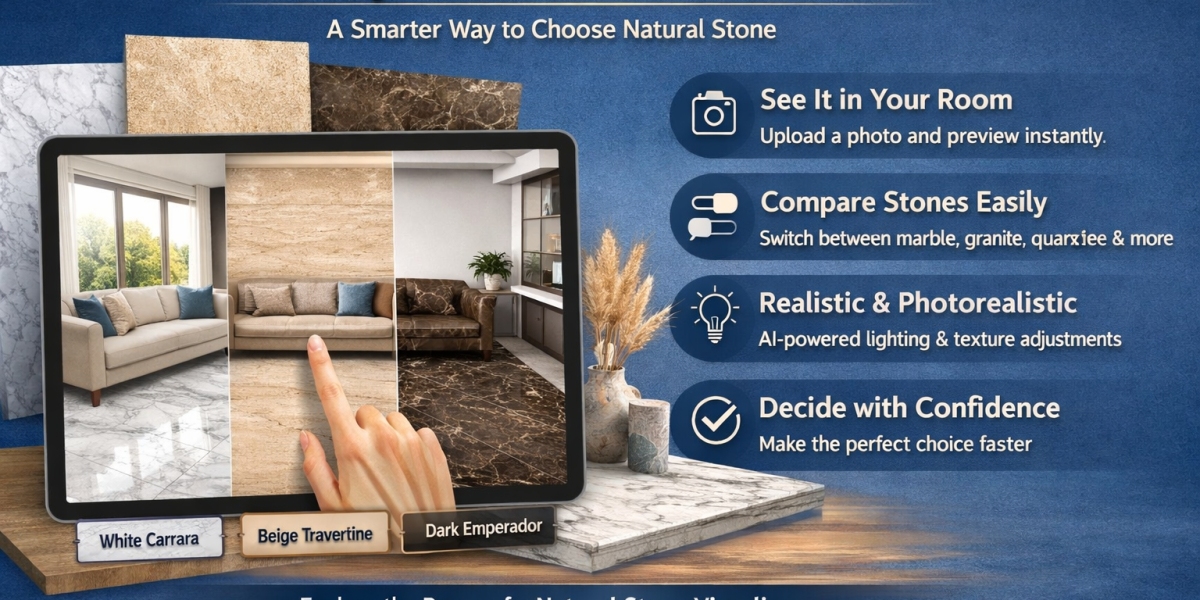

A smarter way to choose natural stone
Choosing natural stone for a home or commercial space has always been exciting—but also confusing. Whether it’s marble, granite, or quartzite, customers often rely on small samples, catalogs, or imagination to make big decisions. And let’s be honest—what looks perfect in a showroom doesn’t always translate the same way in a real space.
This is exactly where a natural stone visualizer changes the game.
Instead of guessing, customers can now see how a specific stone will actually look in their own room or a realistic setting. From lighting and texture to scale and placement, everything becomes clearer. And when clarity improves, decisions become faster and more confident.
What is a Natural Stone Visualizer?
A natural stone visualizer is a digital tool that allows users to apply stone materials—like marble, granite, or travertine—onto real-life spaces or uploaded room images.
How it works
- Upload a photo of a room or choose from preset designs
- Select a stone from a catalog
- Apply it to floors, walls, countertops, or any surface
- Instantly preview the result in high realism
This isn’t just a basic overlay. Modern visualizers use advanced AI and rendering techniques to adjust lighting, shadows, reflections, and texture alignment—so the final output looks natural and believable.
Why traditional methods fall short
Before tools like a natural stone visualizer, customers relied on:
- Small physical samples
- Printed catalogs
- Verbal recommendations from sales teams
The problem?
A small marble sample can never show:
- Full slab variation
- Vein flow and bookmatching
- Real lighting impact in a space
This often leads to hesitation, delayed decisions, or even post-purchase regret.
How a Natural Stone Visualizer improves the buying experience
1. Removes guesswork completely
Customers no longer have to imagine how a stone will look. They can see it in their actual space or a close replica. This reduces confusion and builds immediate confidence.
2. Helps compare multiple options instantly
Instead of visiting multiple showrooms or juggling samples, users can switch between different stones in seconds. This makes comparison faster and more intuitive.
3. Shows realistic results
A high-quality natural stone visualizer reflects:
- True color tones
- Natural texture variations
- Lighting conditions
- Surface finishes (polished, matte, etc.)
This level of detail helps customers make decisions they won’t regret later.
4. Speeds up decision-making
When customers clearly see what they’re getting, they don’t need days or weeks to decide. This shortens the sales cycle significantly.
Real-world example: From confusion to clarity
Imagine a homeowner selecting marble for their living room floor. They shortlist three options:
- White Carrara
- Beige Travertine
- Dark Emperador
Using a natural stone visualizer, they upload a photo of their living room and apply each option.
Within minutes, they notice:
- The white marble brightens the room but feels too cold
- The dark stone looks rich but makes the space feel smaller
- The beige travertine creates a warm and balanced look
Without stepping into multiple stores or second-guessing, they confidently choose the best option.
Why businesses are adopting natural stone visualizers
For stone brands, dealers, and retailers, this isn’t just a nice-to-have feature—it’s becoming essential.
Higher conversion rates
When customers can visualize products clearly, they are more likely to buy. The gap between interest and purchase becomes much smaller.
Better customer experience
Offering a natural stone visualizer makes the buying journey more interactive and engaging. It also positions the brand as modern and customer-focused.
Reduced returns and dissatisfaction
Since customers already know how the product will look, there are fewer surprises after installation.
Stronger sales support
Sales teams can use the tool during client meetings or showroom visits to guide decisions more effectively.
The role of AI in modern stone visualization
Today’s visualizers are powered by AI, which takes realism to another level.
Key AI capabilities include:
- Automatic surface detection (walls, floors, countertops)
- Intelligent texture mapping based on perspective
- Real-time lighting adjustments
- Seamless blending with existing room elements
Platforms like Nirwana.ai are pushing this further by enabling brands to offer highly realistic, scalable visualization experiences across websites, showrooms, and even sales presentations.
What to look for in a good natural stone visualizer
Not all tools are built the same. If you’re a brand or retailer considering one, focus on these factors:
1. Photorealism
The output should look as close to real as possible—not like a flat overlay.
2. Ease of use
Customers should be able to use the tool without training or guidance.
3. Fast performance
Slow tools kill engagement. Visualization should happen instantly or within seconds.
4. Catalog integration
Your entire stone collection should be easily accessible and organized within the visualizer.
5. Multi-platform compatibility
The tool should work across:
- Websites
- Mobile devices
- In-store kiosks
A solution like Nirwana.ai offers these capabilities while keeping the experience smooth and brand-focused.
The future of stone buying is visual-first
Consumer behavior is changing fast. People no longer want to imagine—they want to see.
A natural stone visualizer aligns perfectly with this shift. It turns a traditionally complex buying process into something simple, visual, and enjoyable.
As more brands adopt this technology, it will soon become the standard rather than a differentiator.
Final thoughts
Choosing natural stone is a significant decision, and customers deserve clarity before they commit. A natural stone visualizer provides that clarity by turning imagination into reality.
For homeowners, it removes doubt.
For businesses, it drives conversions and builds trust.
If you’re looking to enhance your customer experience and stand out in a competitive market, now is the time to embrace this technology.
Explore how solutions like Nirwana.ai can help you deliver a smarter, more visual buying journey—one where your customers don’t just imagine their space, they see it.