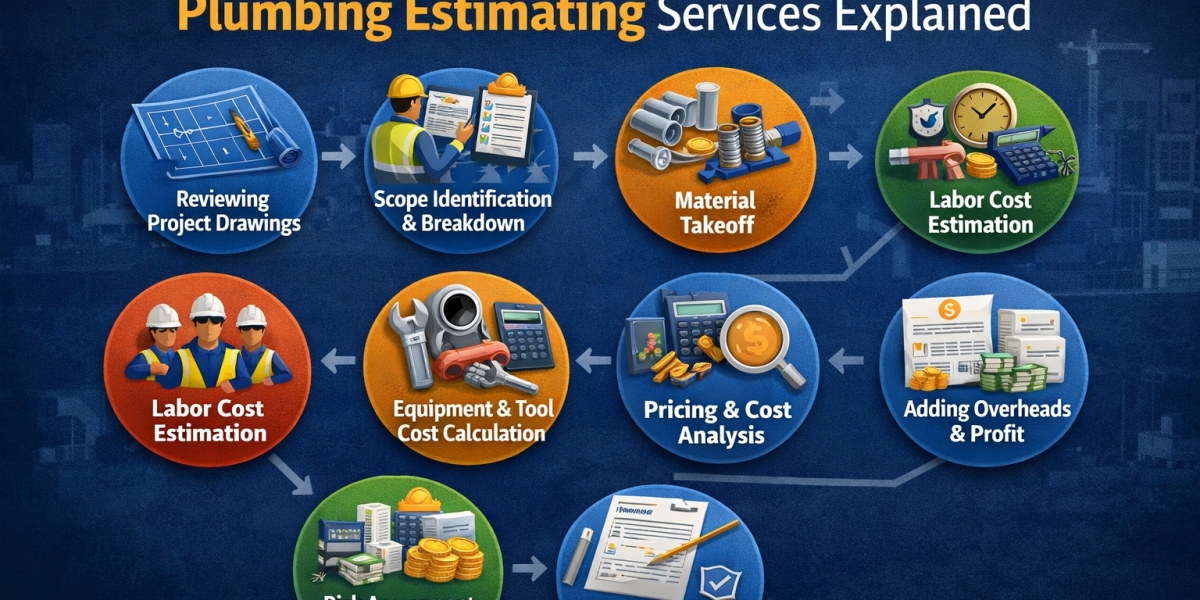

In the construction industry, accurate cost estimation is the backbone of successful project execution. Among the many specialized services involved, plumbing estimating plays a critical role in ensuring that water supply, drainage, and piping systems are properly planned and budgeted. Without precise estimates, plumbing projects can quickly face cost overruns, delays, and operational inefficiencies.Plumbing estimating services provide a structured and detailed approach to calculating the materials, labor, and costs required for plumbing systems. This article explains the step-by-step process of plumbing estimating services, highlighting their importance in achieving accurate construction planning and efficient project delivery.
What Are Plumbing Estimating Services?
Plumbing estimating services involve analyzing construction drawings and specifications to determine the total cost of plumbing systems in a project. These services include material takeoffs, labor cost calculations, and overall budget forecasting.Plumbing systems are complex and require careful planning to ensure proper functionality and compliance with regulations. Accurate estimating ensures that every component from pipes and fittings to fixtures and valves is accounted for.
Why Plumbing Estimating Is Important
Plumbing systems are essential for the functionality and safety of any building. Errors in estimation can lead to serious issues such as water leakage, drainage problems, and increased maintenance costs.
Accurate plumbing estimating services help.
Prevent budget overruns
Ensure proper resource allocation
Improve project efficiency
Reduce material waste
Enhance overall project quality
By following a systematic approach, these services provide reliable data that supports effective decision-making.
Step-by-Step Process of Plumbing Estimating Services
Step 1: Reviewing Project Drawings and Specifications
The first step in plumbing estimating is a thorough review of project drawings, blueprints, and specifications. Estimators analyze architectural, mechanical, and plumbing plans to understand the scope of work.
This includes identifying.
Pipe layouts and routing
Fixture locations
System requirements (water supply, drainage, gas lines)
Material specifications
A clear understanding of the project scope is essential for accurate estimation.
Step 2: Scope Identification and Breakdown
Once the drawings are reviewed, the next step is to define and break down the scope of work. This involves categorizing different components of the plumbing system, such as:
Domestic water systems
Sanitary drainage systems
Stormwater systems
Gas piping systems
Breaking down the scope helps ensure that no part of the project is overlooked and allows for more precise calculations.
Step 3: Material Takeoff
Material takeoff is one of the most critical steps in plumbing estimating. It involves calculating the quantities of all materials required for the project.
This includes.
Pipes and fittings
Valves and fixtures
Pumps and equipment
Insulation materials
Accurate material takeoffs help in avoiding shortages or excess inventory, ensuring efficient resource management.
Step 4: Labor Cost Estimation
Labor costs are a significant part of plumbing projects. Estimators calculate the number of workers required and the time needed to complete each task.
Factors considered include.
complexity of the installation
Skill level required
Project timeline
Accurate labor estimation helps in planning workforce requirements and controlling costs.
Step 5: Equipment and Tool Cost Calculation
In addition to materials and labor, plumbing projects require specialized tools and equipment. Estimators include the cost of equipment such as.
Pipe cutting and threading tools
Welding equipment
Testing and inspection tools
Including these costs ensures a comprehensive estimate and prevents unexpected expenses.
Step 6: Pricing and Cost Analysis
After calculating materials, labor, and equipment, the next step is pricing. Estimators assign costs based on current market rates, supplier quotes, and historical data.
This step involves.
Comparing supplier prices
Considering transportation and logistics costs
Accounting for inflation and market fluctuations
A detailed cost analysis ensures that the estimate is realistic and competitive.
Step 7: Adding Overheads and Profit Margins
To finalize the estimate, overhead costs and profit margins are added. Overheads may include administrative expenses, insurance, and project management costs.Profit margins are calculated based on project complexity, risk factors, and market conditions. This step ensures that the project remains financially viable for contractors.
Step 8: Risk Assessment and Contingency Planning
Every construction project involves risks, such as design changes, material price fluctuations, and unforeseen site conditions. Estimators include contingency allowances to account for these uncertainties.This proactive approach helps in managing risks and avoiding financial setbacks during project execution.
Step 9:Preparing the Final Estimate Report
The final step is compiling all the data into a detailed estimate report. This report includes:
Material quantities and costs
Labor breakdown
Equipment costs
Total project cost
Assumptions and exclusions
A well-structured report provides clarity and transparency, making it easier for stakeholders to review and approve the estimate.
Step 10: Review and Quality Check
Before submission, the estimate undergoes a thorough review to ensure accuracy and completeness. This includes verifying calculations, cross-checking quantities, and ensuring compliance with project requirements.Quality checks help in minimizing errors and improving the reliability of the estimate.
Benefits of Following a Structured Estimating Process
A step-by-step approach to plumbing estimating offers several advantages.
Improved Accuracy: Detailed analysis reduces errors
Better Budget Control: Accurate estimates prevent overspending
Enhanced Efficiency: Streamlined processes save time
Increased Client Confidence: Transparent estimates build trust
This structured methodology ensures that plumbing projects are planned and executed effectively.
Challenges in Plumbing Estimating
Despite its importance, plumbing estimating can be challenging due to.
Complex system designs
Frequent design changes
Fluctuating material prices
Coordination with other trades
However, these challenges can be overcome by using advanced tools, maintaining up-to-date data, and following best practices.
Role of Technology in Plumbing Estimating
Modern plumbing estimating services leverage advanced technology to improve accuracy and efficiency. Digital tools and software enable estimators to perform precise calculations and generate detailed reports quickly.
Key technologies include.
Digital takeoff software
Building Information Modeling (BIM)
Cloud-based collaboration platforms
Automated cost databases
These tools reduce manual effort and enhance the overall estimating process.
Why Plumbing Estimating Services Are a Smart Investment
Investing in professional plumbing estimating services provides long-term benefits.
Cost Savings: Prevents budget overruns
Efficient Planning: Ensures smooth project execution
High-Quality Results: Accurate planning leads to better performance
Competitive Advantage: Helps contractors win more bids
In a competitive construction industry, accurate estimating is a key factor in achieving success.
Conclusion
Plumbing estimating services are an essential part of construction planning, providing the accuracy and detail needed to ensure successful project execution. By following a step-by-step process from reviewing drawings to preparing final reports these services help in managing costs, optimizing resources, and reducing risks.As construction projects become more complex, the demand for precise and reliable estimating will continue to grow. Adopting a structured approach and leveraging modern technology can significantly improve the accuracy and efficiency of plumbing estimates.For businesses aiming to achieve precision and reliability in their projects, working with professionals like SMA MEP Estimate can make a significant difference in delivering accurate, efficient, and high-quality plumbing solutions.