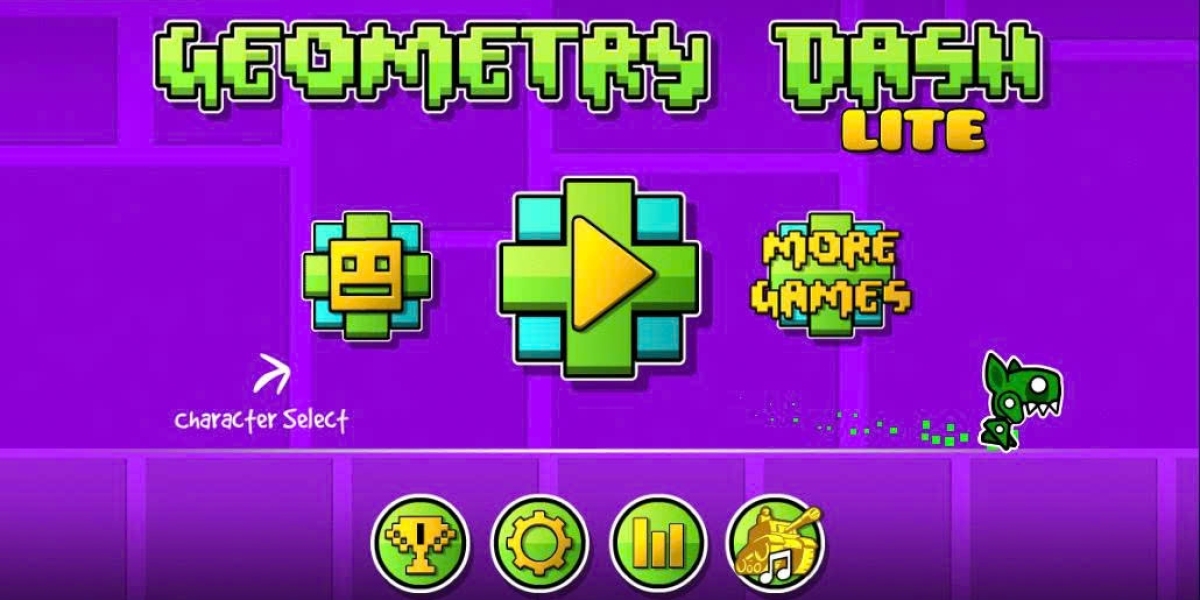

If you've ever wondered what makes jumping games so addictive, you're not alone. There's something deeply satisfying about timing a leap perfectly, watching your character soar over obstacles, and reaching the finish line. Today, let's explore the world of geometry-based platformers, using Geometry Dash as our guide to understanding what makes these games tick.
What Makes Jump Games So Thrilling?
Geometry Dash perfectly captures this essence by stripping gameplay down to its purest form. You're a small geometric square navigating through increasingly complex levels filled with spikes, platforms, and moving hazards. The beauty is in its simplicity, yet the challenge is genuinely demanding.
Understanding the Gameplay Mechanics
At its heart, Geometry Dash is about learning patterns and executing them flawlessly. Each level is essentially a choreographed dance between your character and the environment. The game syncs obstacles to music, creating a rhythm-based experience that feels more like playing an instrument than traditional gaming.
Your primary action is jumping. That's it. One button, infinite possibilities. Early levels teach you the fundamentals—basic jumping over stationary spikes and simple gaps. But as you progress, the game introduces new mechanics. Your character transforms into different shapes and forms: a ship that flies through corridors, a ball that bounces around, a wave that surfs through terrain, and more. Each transformation changes how you interact with the environment.
The learning curve is gentle at first. Beginner levels give you plenty of space to make mistakes and adjust. But intermediate and harder levels? They demand precision timing and memorization. You'll need to remember exactly where to jump, how long to hold the button, and when to release. This is where Geometry Dash truly tests your skills.
Practical Tips for Getting Better
Start with the fundamentals. Don't skip early levels thinking they're boring. They teach muscle memory and help you understand how your character handles. This foundation is crucial for later challenges.
Play in short sessions. It's tempting to grind for hours, but your performance actually degrades when you're tired. Take breaks between attempts. You'll return refreshed and often beat sections you were previously struggling with.
Watch your replays. Most geometry jump games let you see exactly where you failed. Use this to identify patterns. Are you jumping too early? Too late? Understanding your specific mistakes is half the battle.
Don't memorize blindly. Some players try to memorize every jump before attempting a level. While this works eventually, it's inefficient. Instead, learn the first section thoroughly, then move forward. Build your knowledge organically.
Adjust your settings. Games like Geometry Dash let you customize controls and visual settings. Find what feels natural for you. Some players prefer mouse clicking, others like keyboard controls. Experiment until something clicks.
Accept that failure is the teacher. Every death is information. The spike pattern that destroyed you fifteen times? You'll recognize it immediately on attempt number twenty-five. Progress isn't always visible, but it's happening.
Practice the hard sections separately. Most geometry games let you start from checkpoints. If a particular spike corridor is destroying you, practice just that part repeatedly until it becomes automatic.
The Psychology Behind the Appeal
There's a reason geometry jump games have such dedicated communities. They tap into our desire for achievement and mastery. Each level completed feels like a genuine accomplishment because you know exactly how difficult it was. There's no luck involved, no randomness to blame. You succeeded because you got better.
The rhythm element adds another layer. Your brain synchronizes with the music and the obstacle patterns, creating an almost meditative state during successful runs. When you're "in the zone," playing feels effortless, even when you're tackling genuinely challenging content.
Wrapping Up Your Jump Game Journey
Geometry Dash and similar geometry-based platformers offer something special in gaming: the pure satisfaction of overcoming challenges through skill and determination. They're not about story or graphics or complex mechanics. They're about you, the obstacles, and your ability to master their patterns.
Whether you're a casual player enjoying levels at your own pace or a dedicated enthusiast attempting the hardest creations, there's something valuable here. These games teach patience, focus, and perseverance—skills that extend beyond gaming.
The next time you're looking for a gaming experience that's both challenging and rewarding, consider jumping into the geometric universe. Start with the basics, embrace the learning process, and before long, you'll be sailing through levels that once seemed impossible. That's the real appeal of jump games: they're proof that with practice and determination, you can achieve what once felt out of reach.
Now go jump.