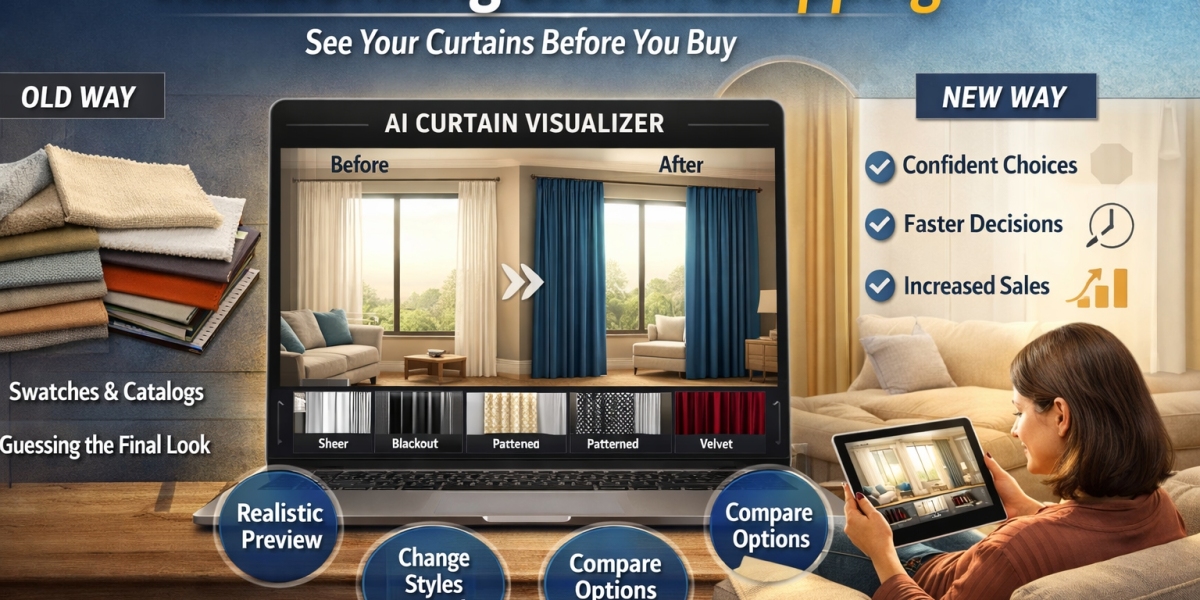

Why Curtains Are Still One of the Hardest Products to Sell Visually
Curtains can completely change the mood of a room. They add softness, color, privacy, warmth, and style. But they are also one of the hardest home décor products to sell with confidence, especially online. A customer may love the fabric sample, the print, or the texture, yet still hesitate because they cannot clearly imagine how it will look once it is hanging in their own bedroom, living room, or office.
That hesitation is where many brands lose sales.
Photos of folded fabric, studio shots, and swatch cards can only do so much. Customers want to know how a sheer curtain will look in daylight, whether a blackout curtain will feel too heavy in a small room, or if a pattern will match their wall color and furniture. This is exactly why the ai curtain visualizer is becoming such a useful tool for curtain brands, retailers, and home décor businesses.
Instead of asking customers to guess, brands can now help them preview curtains in realistic spaces before they buy.
What Is an AI Curtain Visualizer?
An ai curtain visualizer is a digital tool that allows users to upload a room image or choose a sample room, then apply different curtain designs to windows in a realistic way. It helps customers see how fabric, color, pattern, drape, and style will look in an actual interior setting.
This is much more powerful than a basic room mockup. A good ai curtain visualizer gives shoppers a near-real-life preview of the final look. It reduces uncertainty and makes the decision process easier, faster, and more enjoyable.
For brands, it turns browsing into interaction. For customers, it turns imagination into clarity.
Why Traditional Curtain Selling Often Falls Short
Curtains are not impulse purchases. They affect the overall feel of a room and usually need to coordinate with several other elements, such as furniture, flooring, wall paint, and lighting. That means the buying decision often takes longer than expected.
Customers Struggle to Picture the Final Result
A fabric card may show quality, but it does not show scale or atmosphere. A customer looking at ten beige curtain options may find it nearly impossible to know which one will actually work best in their own home.
Showroom Displays Cannot Cover Every Combination
Even large showrooms have limits. Brands cannot physically display every curtain variation across every room style, window size, and color palette. This makes it hard to present the full catalog in a compelling way.
Online Stores Face Higher Doubt
When someone shops online, they do not have a sales representative standing next to them, explaining finish, fall, or styling. Without visual confidence, customers delay the purchase, exit the page, or ask for more samples before deciding.
That is why an ai curtain visualizer is not just a nice extra feature anymore. It is becoming a practical sales tool.
How an AI Curtain Visualizer Helps Curtain Brands Sell Better
The biggest benefit of an ai curtain visualizer is that it gives customers confidence. Once people can actually see a curtain inside a realistic room, they are more likely to make a decision.
It Improves Product Understanding
Customers do not just see color. They see mood. A light linen curtain may feel airy and calm in one room, while a rich velvet curtain may create a premium, dramatic effect in another. Visualization helps customers understand the emotional impact of each choice.
It Increases Engagement
People naturally spend more time on tools that let them interact. Instead of scrolling past static product images, they explore options, compare looks, and stay involved with the brand longer.
It Reduces Purchase Hesitation
When buyers feel unsure, they postpone. When they feel certain, they act. A strong ai curtain visualizer closes the gap between interest and conversion by making the outcome easier to trust.
It Supports Sales Teams and Dealers
This is not only useful for e-commerce. In physical stores and dealer showrooms, a visualization tool can help staff present more designs without needing every fabric sample on display. It becomes a faster and more premium selling experience.
Real Use Cases Across the Curtain Industry
An ai curtain visualizer can be useful in several business settings, not just on a product page.
For Curtain Brands
Brands can showcase full collections digitally and help customers explore options without relying only on swatches and catalog books.
For Retailers and Dealers
Retailers can use the tool in-store to guide customers during consultation. Instead of only discussing fabrics, they can visually demonstrate the final result.
For Interior Designers
Designers often need to present multiple styling options to clients. Visualization helps them show concepts more clearly and speed up approvals.
For D2C Home Décor Businesses
Direct-to-consumer brands can make their websites much more interactive by letting shoppers preview curtains before buying. This helps build trust and can improve online conversions.
What Features Make a Good AI Curtain Visualizer?
Not every visualization tool delivers the same value. A useful solution should feel realistic, easy to use, and aligned with how curtain buyers actually make decisions.
Realistic Fabric Application
The visual output should not look fake or flat. Customers should get a believable sense of drape, coverage, color presence, and style.
Multiple Curtain Styles
A strong ai curtain visualizer should support common styles such as sheer curtains, blackout curtains, layered looks, patterned curtains, and premium decorative drapes.
Room-Based Preview
Users should be able to see the curtain in a real room context, not just isolated on a blank screen.
Simple User Experience
The tool should feel easy even for non-technical users. If it takes too many steps, people will drop off before they reach the preview.
Solutions from companies like Nirwana.ai are helping make this experience more practical for home décor brands that want a more modern, conversion-focused sales journey.
Why This Matters for the Future of Home Décor Selling
Customer expectations have changed. People no longer want to rely only on imagination when buying visual products for their home. They want guidance, clarity, and a realistic sense of outcome before they spend.
That shift is pushing the curtain industry toward smarter digital experiences. The ai curtain visualizer fits perfectly into that change because it solves a real buying problem. It helps brands present more products more effectively while giving customers a better way to choose.
This also creates a stronger brand impression. When a customer uses a seamless visualization experience, the brand feels more innovative, more helpful, and more trustworthy.
Conclusion
Curtains are personal, visual, and highly dependent on context. That is why they are so difficult to sell through static images alone. An ai curtain visualizer gives customers the missing piece: the ability to actually see what they are buying before they commit.
For curtain brands, retailers, and home décor businesses, this means better engagement, stronger confidence, and a smoother buying journey. It is not just about technology. It is about making product discovery easier and more human.
As digital shopping continues to grow, tools like the ai curtain visualizer will become increasingly valuable for brands that want to stand out and sell smarter. Platforms such as Nirwana.ai are helping move the industry in that direction by making visualization more practical, realistic, and customer-friendly.
If your brand wants to make curtain buying simpler and more inspiring, now is a great time to explore what visualization can do.