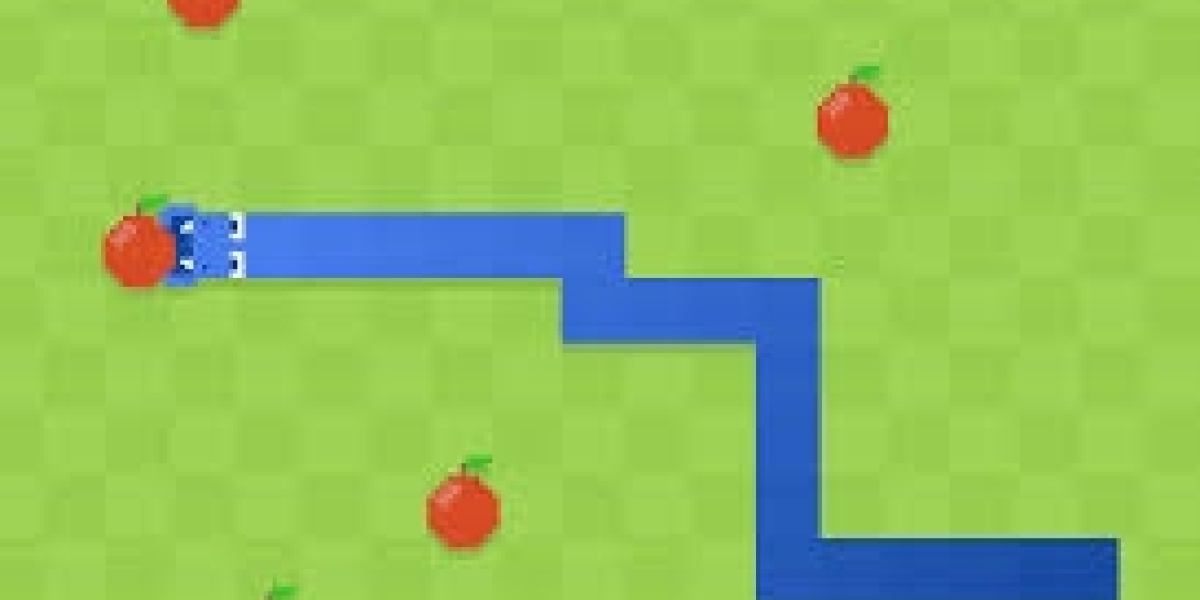

Simple name, deceptively complex challenge. Whether you remember it from the monochrome screen of an old Nokia or you've encountered a modern, vibrant rendition, the core gameplay remains the same: guide a constantly growing snake to consume food, avoiding collisions with walls and itself. While seemingly straightforward, understanding the nuances can elevate your Snake Game experience from casual time-waster to surprisingly engaging puzzle.
Gameplay: A Dance of Growth and Precision
The basic premise of Snake Game is incredibly easy to grasp. You control a snake that continuously moves forward. Your goal is to navigate this snake around a defined space, typically a rectangular grid, and consume food – usually represented as pixels or small squares. Each time the snake eats food, it grows longer. This introduces the central challenge: the longer your snake becomes, the less maneuverable it is, and the higher the risk of colliding with its own body.
Controls are typically simple: directional buttons or arrow keys to control the snake's movement (up, down, left, right). There are no brakes, no speed adjustments. The constant forward motion demands planning and quick reflexes. The game ends when the snake either crashes into the boundaries of the playing area or collides with its own tail. It's a game of spatial awareness, anticipation, and risk management.
Tips for Navigating the Pixelated Maze
While luck plays a role, mastering Snake Game comes down to strategy and practice. Here are a few tips to help you improve your scores:
- Think ahead: Don't just react to the immediate situation. Plan your next few moves, especially as the snake gets longer. Visualize the path you'll need to take to reach the next piece of food without trapping yourself.
- Utilize the edges: Using the walls as guides can be advantageous, especially in the early stages. You can effectively "fence" yourself in, reducing the available space for the snake to maneuver and making planning easier. Just be mindful of the potential for accidental self-imprisonment.
- Avoid sharp turns: Sharp turns, especially near the snake's tail, can lead to disaster. Try to create smoother, more gradual curves to give yourself more room for error.
- Practice, practice, practice: This may seem obvious, but the more you play, the better you'll become at judging distances, anticipating movements, and recognizing potential hazards. Experiment with different strategies and find what works best for you. You can even try playing variations of the game. For example, the classic Snake Game offers a pure, nostalgic experience.
- Learn to "loop": Advanced players often utilize a technique called "looping" where they create a large, winding path within the playing field. This allows them to control the space and gives them more time to react to new food placements. This takes a lot of practice, but it's incredibly effective when mastered.
Conclusion: A Timeless Classic for a Reason
The enduring appeal of Snake Game lies in its simplicity and accessibility, combined with a surprising depth of strategic gameplay. It's a game that's easy to pick up but difficult to master, offering a satisfying challenge that keeps players coming back for more. Whether you're looking for a quick distraction or a challenging puzzle to test your skills, Snake Game offers a rewarding experience that transcends generations. So, boot up your favorite version, embrace the pixelated challenge, and see how long you can survive!