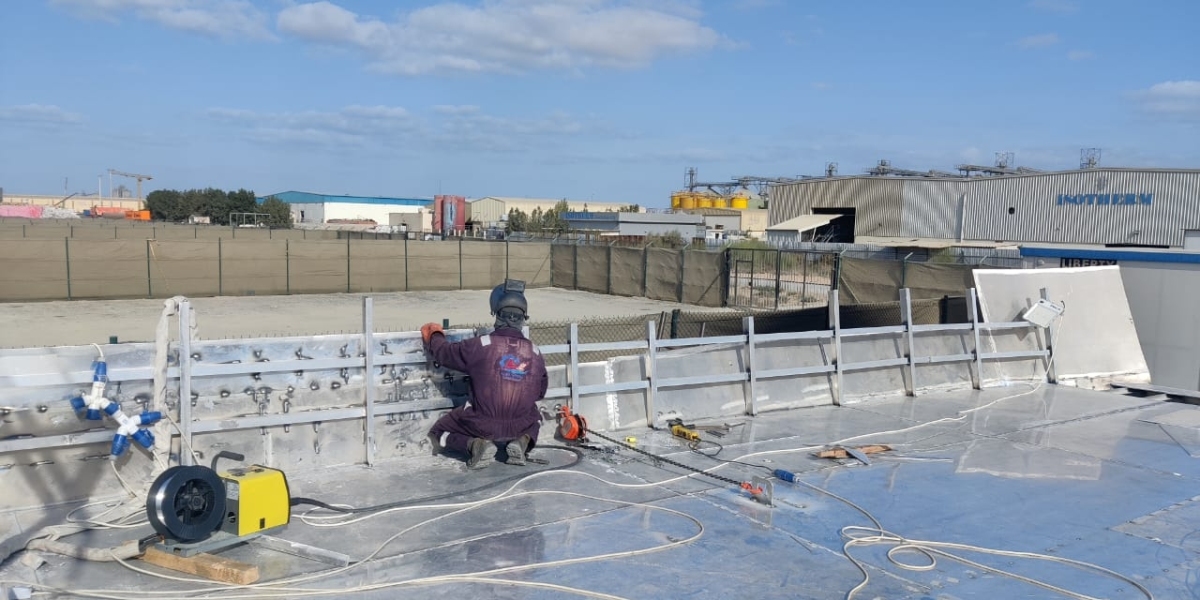

Aluminum barge builders are becoming increasingly important in today’s marine industry as sustainability and operational efficiency take center stage. With growing environmental regulations and rising fuel costs, marine operators are actively searching for lighter, stronger, and more eco-friendly vessel solutions. Aluminum barges have emerged as a preferred alternative to traditional steel barges due to their lower weight, corrosion resistance, and long-term cost efficiency. As global maritime trade accounts for nearly 80% of international cargo transport by volume, according to international shipping statistics, the demand for sustainable marine infrastructure continues to grow rapidly. This shift has positioned aluminum construction as a key solution for modern marine engineering challenges.
Why Aluminum is Transforming Marine Engineering
One of the main reasons aluminum is revolutionizing barge construction is its lightweight nature. Aluminum is approximately 60% lighter than steel, which significantly improves fuel efficiency. Studies indicate that reducing vessel weight can lower fuel consumption by 20% to 30%, depending on operational conditions. Lower fuel usage directly reduces carbon emissions, which is critical as global maritime authorities aim to cut shipping emissions by at least 40% by 2030.
Another major advantage is recyclability. Aluminum is 100% recyclable without losing its structural integrity. Recycling aluminum uses up to 95% less energy compared to producing primary aluminum from raw materials. This makes aluminum barges not only energy-efficient during operation but also environmentally responsible throughout their lifecycle.
Strength, Durability, and Corrosion Resistance
Marine environments are harsh, with constant exposure to saltwater, humidity, and extreme weather. Steel vessels often require frequent anti-corrosion treatments and repainting, increasing maintenance costs. Aluminum naturally forms a protective oxide layer that enhances corrosion resistance, reducing long-term upkeep.
Research suggests that aluminum barges can maintain a service life of 25 to 30 years or more when properly maintained. Lifecycle cost comparisons show that although aluminum vessels may have a slightly higher initial investment, they can reduce maintenance expenses by 15% to 25% over time. This makes them economically attractive for long-term marine operations such as offshore construction, dredging, logistics transport, and port support services.
Innovation Among Aluminium Barge Manufacturers
Modern aluminium barge manufacturers are integrating advanced engineering tools to improve performance and sustainability. Technologies such as computer-aided design (CAD) and finite element analysis (FEA) allow engineers to optimize hull structures for strength while minimizing material usage. This precision not only reduces construction waste but also improves vessel stability and load distribution.
Manufacturers are also adopting environmentally friendly fabrication practices. These include energy-efficient welding systems, waste recycling during metal cutting, and reduced-emission finishing processes. Such innovations contribute to lowering the overall carbon footprint of vessel production. As sustainability reporting becomes more important across industries, these practices give marine operators confidence that their vessels align with environmental standards.
Regional Growth and Barge Builders in UAE
The Middle East has become a major hub for marine infrastructure development, driven by port expansions, offshore energy projects, and coastal construction initiatives. In this context, barge builders in UAE are playing a crucial role in meeting the region’s demand for efficient and durable marine platforms. The UAE’s strategic location between major global trade routes strengthens its position as a center for marine manufacturing and export.
Marine industry data shows steady growth in vessel demand across the Gulf region, supported by government investments in maritime logistics and offshore development. Companies operating in this environment must deliver vessels that withstand extreme heat, salinity, and heavy operational loads. Aluminum barges, with their corrosion resistance and structural strength, are well-suited to these regional conditions.
VU Marine contributes to this growing marine ecosystem by focusing on innovative aluminum solutions that balance performance with environmental responsibility. By emphasizing engineering precision and durability, VU Marine supports sustainable marine infrastructure across diverse operational sectors.
Operational Efficiency and Payload Benefits
Weight reduction in aluminum barges directly translates into higher payload capacity. Because the structure itself weighs less, operators can transport more cargo without exceeding draft limitations. Studies indicate that aluminum barges can carry 15% to 20% more payload compared to comparable steel models.
This increased efficiency reduces the number of trips required for transporting materials, which lowers fuel consumption and operational costs. For offshore construction projects and marine logistics operations, this efficiency can significantly impact overall project timelines and budgets.
A leading barge building company understands that performance is not only about strength but also about long-term efficiency. Advanced hull design improves hydrodynamics, reducing water resistance and further enhancing fuel savings. Stability testing and structural evaluations ensure safe operations even under heavy loads or challenging sea conditions.
The Future of Sustainable Marine Engineering
The global aluminum marine vessel market is projected to grow at a compound annual growth rate (CAGR) of approximately 5% over the next decade. This growth is driven by stricter environmental policies, technological advancements, and increased awareness of lifecycle cost efficiency. Governments and private operators are investing in lighter, more energy-efficient vessels to meet sustainability targets and improve operational profitability.
Future developments may include hybrid propulsion systems combined with aluminum structures to further reduce emissions. Advances in aluminum alloy technology are also expected to improve strength-to-weight ratios, making barges even more durable and efficient.
As sustainability becomes a permanent focus in marine engineering, aluminum barges are likely to become a standard rather than an alternative. Companies like VU Marine, which prioritize environmentally aligned engineering and innovative design, are helping shape this transition toward cleaner and more efficient marine operations.
Conclusion
Sustainable marine engineering is redefining vessel construction standards worldwide. Aluminum barges offer significant advantages in fuel efficiency, corrosion resistance, recyclability, and long-term cost savings. With increasing global trade and stricter environmental regulations, demand for lightweight and durable marine platforms continues to rise.
Through advanced design practices, responsible manufacturing, and lifecycle-focused engineering, aluminum barge construction represents the future of maritime infrastructure. By aligning innovation with sustainability, VU Marine demonstrates how modern marine engineering can deliver reliable, efficient, and environmentally responsible solutions for years to come.