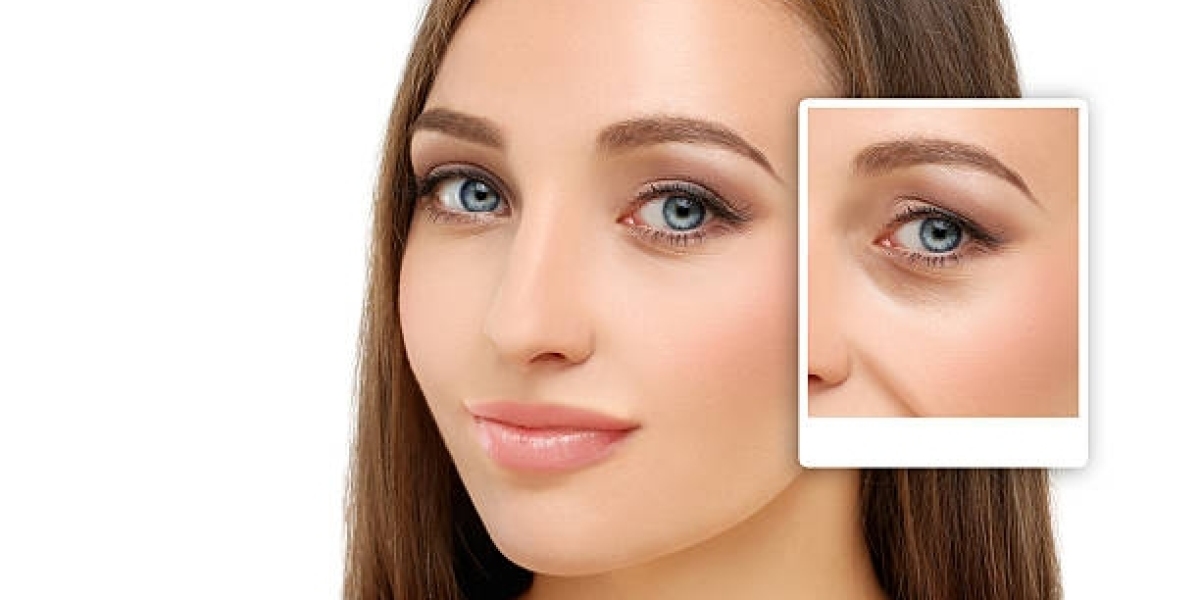

Under-eye filler injections in Dubai are a precise, non-surgical approach to correcting tear trough hollows. While many patients focus on results, understanding the mechanics of how fillers work beneath the skin can help manage expectations and reduce anxiety. This guide explains the step-by-step mechanics, filler behavior, anatomical considerations, and how volume restoration improves both appearance and light reflection under the eyes.
How Under-Eye Fillers Work Mechanically
The under-eye area has thin skin, minimal fat, and delicate lymphatic and vascular structures. Fillers work by restoring lost volume and supporting the under-eye structure.
Key mechanical actions include:
Volume replacement: Filler occupies the hollow, lifting overlying skin
Structural support: Placed deep along bone or tissue to prevent shadowing
Light reflection: Filling hollows reduces shadows, making eyes appear brighter
Integration with tissue: Low-density hyaluronic acid blends with skin for natural movement
In clinical practice, correct depth and filler type are more important than quantity for achieving smooth, natural results.
Step-by-Step Mechanics During Treatment
Assessment: Identify hollow depth, symmetry, and skin thickness
Marking: Anatomical landmarks are outlined to ensure precision
Numbing: Topical anesthetic reduces discomfort
Injection: Low-density filler is placed using a blunt cannula or fine needle
Tissue integration: Gentle molding helps filler blend with surrounding tissue
Immediate evaluation: Practitioner ensures uniform correction and natural contour
Patients often report a pressure or spreading sensation rather than pain during injection.
Factors Influencing Mechanical Behavior
Several factors affect how the filler behaves once injected:
Filler type: Low G prime, low water-binding fillers integrate smoothly
Depth of injection: Deeper placement reduces risk of lumps and puffiness
Volume injected: Conservative dosing prevents overcorrection
Anatomical variation: Skin thickness, bone structure, and lymphatic drainage influence results
Proper understanding of these factors is crucial for safe and effective treatment.
Definition: What Are Tear Trough Mechanics?
Tear trough mechanics refer to how filler interacts with the under-eye tissue to restore volume, support skin, and reduce shadows. It involves precise placement, tissue integration, and controlled expansion to achieve a natural contour.
Mechanical Benefits of Under-Eye Fillers
Subtle contour correction: Smooth transition from lower eyelid to cheek
Shadow reduction: Hollow areas reflect less light, making eyes appear brighter
Non-surgical volume restoration: Avoids downtime and scarring
Adjustable results: Fillers can be modified or dissolved if necessary
Common Mechanical Challenges
Even when expertly administered, certain challenges can occur:
Swelling or mild edema: Especially in patients prone to fluid retention
Uneven filler integration: Often due to tissue variations
Temporary lumpiness: Usually resolves as filler settles over 5–7 days
Overcorrection: Avoided with conservative dosing
Monitoring and patient education are key to mitigating these challenges.
Frequently Asked Questions
How do fillers physically lift under-eye hollows?
Fillers occupy the depression beneath the skin, supporting tissue and restoring volume, which smooths contours and reduces shadows.
Can filler placement affect swelling?
Yes. Superficial placement or overfilling increases swelling, whereas deep, precise injections minimize puffiness.
How long until mechanical integration completes?
Filler typically integrates with surrounding tissue within 5–7 days, after which final contour is visible.
Are all fillers mechanically the same under the skin?
No. Low-density, low water-attracting fillers behave differently than stiff or high G prime fillers. Selection is critical.
Can mechanics vary between patients?
Yes. Skin thickness, hollow depth, and lymphatic function all affect filler behavior and settling.
What if the filler does not settle evenly?
Minor irregularities often resolve as swelling decreases. Persistent issues can be corrected by careful adjustment or partial dissolution.
Why Choose Us
At Tajmeels Clinic, under-eye filler injections are performed with precision, respecting the unique mechanics of each patient’s anatomy. By understanding tissue behavior, filler selection, and placement depth, we ensure safe, natural, and long-lasting results. Every step is tailored to provide optimal structural support while minimizing swelling and complications.