
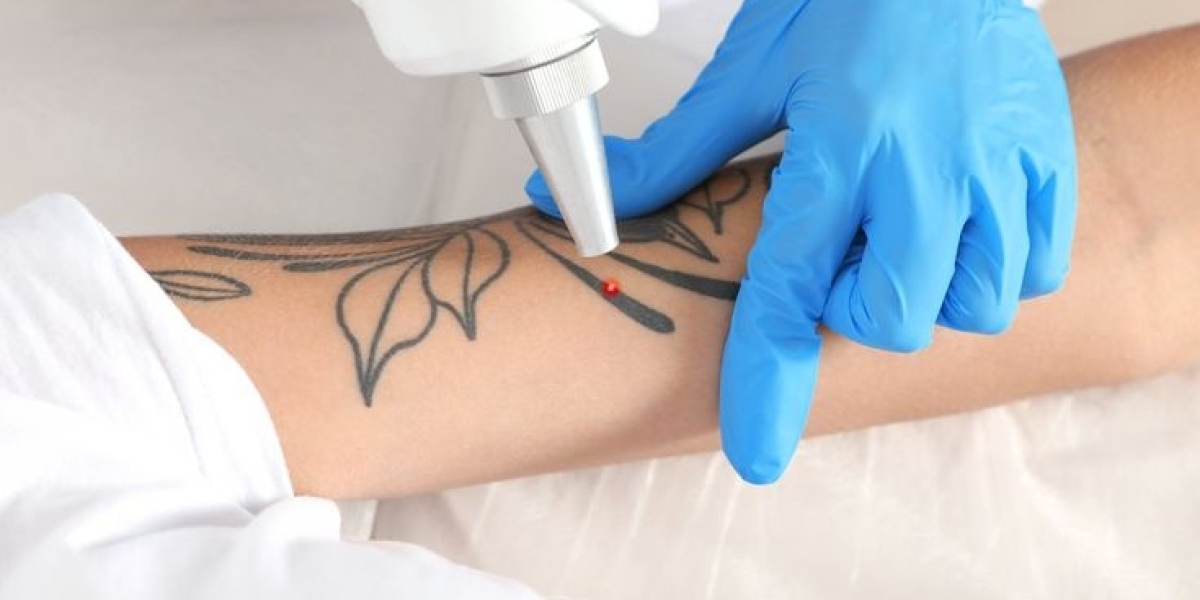

Removing a tattoo in riyadh(إزالة الوشم الدائم في الرياض)from melanin-rich skin requires a highly specialized approach to protect your natural pigment while effectively shattering the ink. Because darker skin (Fitzpatrick types IV–VI) has more active melanocytes, the risk of hyperpigmentation (dark spots) or hypopigmentation (light spots) is higher if the wrong laser or settings are used.
Here is the professional guide to safe and permanent removal for dark skin.
1. The Gold Standard: 1064nm Nd:YAG Laser
Not all lasers are safe for dark skin. Some wavelengths are "seen" by your skin’s melanin, which can lead to burns or permanent lightening.
The 1064nm Wavelength: This is the safest and most effective wavelength for dark skin. It is "color-blind" to melanin, meaning it bypasses the surface pigment and travels deep into the dermis to target only the tattoo ink.
Picosecond vs. Q-Switched: * Picosecond (e.g., PicoWay): The newest technology. It delivers energy in trillionths of a second, using "photo-acoustic" shockwaves to shatter ink without generating excessive heat. Less heat means a much lower risk of skin damage.
Q-Switched: The traditional standard. While effective, it relies more on thermal energy, so it must be used with very conservative settings on dark skin.
2. Managing Ink Colors
The color of your tattoo significantly impacts the safety of the process:
Black & Dark Blue: These are the safest to remove on dark skin because they respond best to the 1064nm wavelength.
Red, Orange, & Yellow: These require shorter wavelengths (like 532nm) which are highly attracted to melanin. Removing these colors on dark skin carries a much higher risk and should only be attempted by a master technician using a "test spot" strategy.
Green & Light Blue: Traditionally difficult, these may require specific picosecond settings (730nm/785nm).
3. Essential Safety Protocols
To ensure professional results without scarring, insist on these steps:
The Patch Test: A reputable clinic will always perform a test spot on a small, hidden area of the tattoo and wait 4 to 8 weeks to see how your skin reacts before proceeding with a full session.
Conservative Settings: For dark skin, "slow and steady" wins. Lower energy settings are used initially to prioritize skin integrity over speed.
Extended Healing Time: While lighter skin may heal in 6 weeks, melanin-rich skin often needs 8 to 12 weeks between sessions to allow the immune system to clear ink and the pigment cells to stabilize.
Cooling Systems: Professional clinics use devices like the "Zimmer Cryo" to blow cold air on the skin during the procedure, which minimizes heat-induced pigment changes.
Comparison of Laser Types for Dark Skin
| Laser Type | Wavelength | Safety for Dark Skin | Best For |
| Nd:YAG | 1064nm | High | Black and dark blue inks; deepest penetration. |
| PicoWay | Multiple | High | Shattering stubborn ink with minimal heat. |
| Alexandrite | 755nm | Moderate | Green/Blue inks; requires extreme caution. |
| Ruby | 694nm | Low | Rarely recommended for dark skin (high risk of white spots). |
4. Professional Aftercare
Dark skin is prone to Post-Inflammatory Hyperpigmentation (PIH). Following these rules is non-negotiable:
Strict Sun Protection: UV exposure on a healing laser site is the #1 cause of dark scarring. Use a mineral-based SPF 50+ daily.
No Picking: Scabbing is normal; picking them can cause permanent texture changes or keloids.
Hydration: Keep the area moist with a fragrance-free ointment (like Aquaphor) for the first 3-5 days.
Warning: Avoid "at-home" tattoo removal creams or chemical peels. These are often highly acidic and can cause severe chemical burns and permanent scarring on darker skin tones.