
Introduction
India is one of the fastest-growing markets in the world, attracting manufacturers from different countries. However, to protect consumers and ensure product quality, the Indian government has made certain certifications mandatory. One of the most important schemes for overseas producers is BIS FMCS.
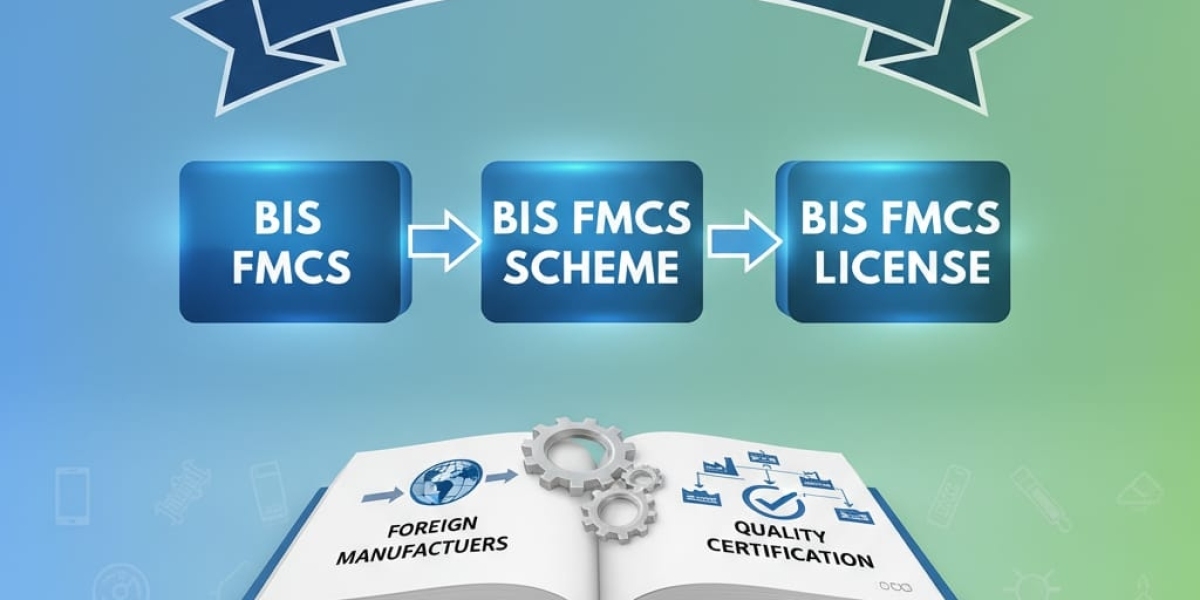
BIS FMCS, also known as the Foreign Manufacturers Certification Scheme, is specifically designed for manufacturers whose production units are located outside India. Through BIS FMCS Certification, foreign manufacturers can legally sell their products in the Indian market. This blog explains BIS FMCS in detail, including eligibility, process, documents, and the importance of BIS Registration for Foreign Manufacturer.
What is BIS FMCS?
BIS FMCS stands for Foreign Manufacturers Certification Scheme. It is a certification scheme launched by the Bureau of Indian Standards (BIS) for foreign manufacturers exporting products to India.
Under this scheme, BIS grants a licence to overseas manufacturers after verifying that their products meet Indian Standards (IS). Once approved, manufacturers can use the ISI Mark on their products, which indicates compliance with Indian safety and quality norms.
BIS FMCS applies to products such as:
Electrical and electronic goods
Power adapters and chargers
Switches, cables, and appliances
Industrial products under mandatory BIS standards
What is BIS FMCS Certification?
BIS FMCS Certification is the official approval granted by BIS to foreign manufacturers. It confirms that the product and manufacturing facility comply with Indian Standards.
Unlike domestic certification, BIS FMCS involves:
Factory inspection outside India
Nomination of an Authorized Indian Representative (AIR)
Ongoing surveillance and compliance
Without BIS FMCS Certification, foreign manufacturers are not allowed to export notified products to India.
What is BIS Registration for Foreign Manufacturer?
BIS Registration for Foreign Manufacturer refers to the complete process of obtaining BIS approval under the FMCS scheme. This registration is mandatory if the product falls under the compulsory certification list notified by BIS.
Foreign manufacturers must register themselves with BIS and submit all required technical, legal, and quality-related documents. The registration ensures accountability and traceability of products entering the Indian market.
Who Needs BIS FMCS Certification?
BIS FMCS Certification is required for:
Manufacturers located outside India
Companies exporting regulated products to India
Foreign brands selling products through Indian importers or distributors
Even if a foreign manufacturer sells through an Indian importer, BIS FMCS Certification must be obtained in the manufacturer’s name.
Role of Authorized Indian Representative (AIR)
One of the key requirements under BIS FMCS is the appointment of an Authorized Indian Representative (AIR).
The AIR:
Acts as a local contact for BIS
Handles communication with BIS authorities
Is responsible for compliance and legal obligations in India
The AIR can be an importer, subsidiary, or consultant based in India.
BIS FMCS Certification Process
The BIS FMCS process is structured and requires careful planning.
Step 1: Identify Applicable Indian Standard
Each product must comply with a specific Indian Standard. Identifying the correct standard is the foundation of BIS FMCS Certification.
Step 2: Nomination of AIR
The foreign manufacturer must appoint an Authorized Indian Representative before applying.
Step 3: Product Testing
Product samples are tested in BIS-recognized laboratories, either in India or abroad.
Step 4: Application Submission
The BIS FMCS application is submitted along with test reports and required documents.
Step 5: Factory Inspection
BIS officials visit the foreign manufacturing facility to verify:
Production process
Quality control systems
In-house testing facilities
Step 6: Grant of BIS FMCS Certification
Once all requirements are met, BIS grants the FMCS licence, allowing the use of the ISI Mark.
Documents Required for BIS FMCS
Key documents required for BIS Registration for Foreign Manufacturer include:
Business registration certificate
Manufacturing process flowchart
Quality control manual
Product test reports
List of machinery and testing equipment
Authorization letter for AIR
Trademark details
Accurate documentation helps avoid delays or rejection.
Validity and Renewal of BIS FMCS Certification
BIS FMCS Certification is generally valid for 1 to 2 years. Renewal must be applied before expiry to continue exporting products to India.
Renewal involves:
Payment of renewal fees
Updated documents
Compliance with surveillance inspections
Failure to renew may result in suspension or cancellation of the licence.
Benefits of BIS FMCS Certification
Obtaining BIS FMCS Certification offers several advantages:
Legal access to the Indian market
Smooth customs clearance
Improved brand trust and credibility
Compliance with Indian regulations
Protection against penalties and product bans
BIS FMCS not only ensures compliance but also strengthens long-term business growth in India.
Common Challenges in BIS FMCS
Foreign manufacturers often face challenges such as:
Understanding Indian Standards
Managing documentation from abroad
Coordinating factory inspections
Communication delays
Professional support helps simplify the BIS FMCS Certification process and ensures faster approvals.
Conclusion
BIS FMCS is a crucial certification scheme for foreign manufacturers exporting products to India. Through BIS FMCS Certification, overseas manufacturers can demonstrate compliance with Indian quality standards and legally enter the Indian market. Completing BIS Registration for Foreign Manufacturer ensures long-term business sustainability and regulatory compliance.
With proper guidance, documentation, and planning, the BIS FMCS process can be completed smoothly and efficiently sunconsultants.co.in