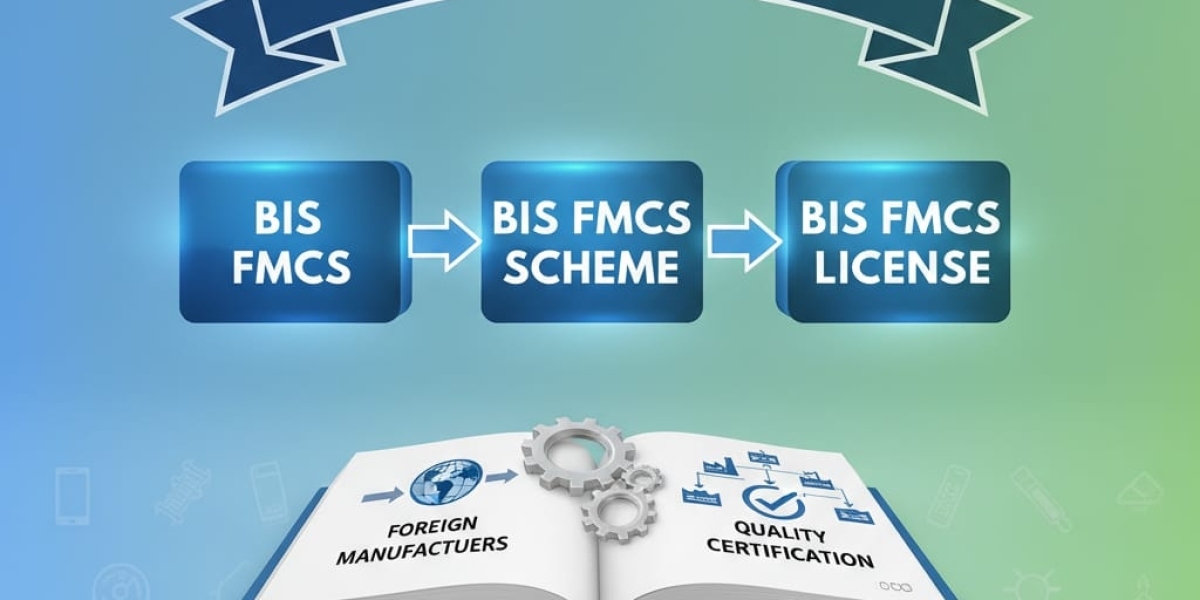

Introduction
India is a highly regulated market when it comes to product quality, safety, and standardization. To protect consumers and ensure that only compliant products enter the market, the government has made BIS Certification mandatory for several product categories. While domestic manufacturers follow standard BIS procedures, foreign manufacturers must comply through a specialized scheme known as BIS FMCS.
The Foreign Manufacturers Certification Scheme ensures that products manufactured outside India meet Indian Standards before being imported and sold. This blog explains BIS FMCS, the scope of BIS FMCS Certification, and how it fits within the broader framework of BIS Certification in India.
What is BIS FMCS?
BIS FMCS stands for Foreign Manufacturers Certification Scheme. It is a certification system introduced by the Bureau of Indian Standards specifically for manufacturers whose production units are located outside India.
Under BIS FMCS, foreign manufacturers are required to obtain BIS approval for products that fall under mandatory Indian Standards. The scheme ensures that imported products comply with the same safety, quality, and performance benchmarks as products manufactured in India.
Understanding BIS FMCS Certification
BIS FMCS Certification is the official approval granted by BIS after evaluating the foreign manufacturing facility and the product. This certification confirms that the product meets the relevant Indian Standard (IS) and that the manufacturing unit follows appropriate quality control practices.
Once approved, BIS issues a license allowing the manufacturer to use the ISI Mark on certified products. This certification is mandatory for notified products and is both factory-specific and product-specific.
Role of BIS Certification in FMCS
While BIS FMCS is a specialized scheme, it falls under the broader umbrella of BIS Certification. BIS Certification is the overarching conformity assessment system that ensures all regulated products—whether domestic or imported—meet Indian Standards.
For foreign manufacturers, BIS Certification is achieved through BIS FMCS Certification. Without this approval, regulated products cannot be legally imported, sold, or distributed in India.
Why BIS FMCS Certification is Mandatory
BIS FMCS Certification is mandatory because it:
Protects Indian consumers from unsafe imported products
Prevents entry of substandard or counterfeit goods
Maintains uniform quality standards across markets
Ensures fair competition between domestic and foreign manufacturers
Facilitates smooth customs clearance
Products imported without BIS FMCS Certification may be rejected at customs or banned from sale.
Products Covered Under BIS FMCS
Several product categories are notified under BIS FMCS, including:
Electrical and electronic products
Industrial machinery and equipment
Steel and metal products
Construction materials
Automotive components
Household appliances
The mandatory product list is updated periodically by BIS through official notifications.
Eligibility for BIS FMCS Certification
To apply for BIS FMCS Certification, the following conditions must be fulfilled:
The manufacturing unit must be located outside India
The product must fall under mandatory BIS Certification
The manufacturer must appoint an Authorized Indian Representative (AIR)
The factory must have adequate testing and quality control facilities
The Authorized Indian Representative acts as the official liaison between BIS and the foreign manufacturer.
BIS FMCS Certification Process
The BIS FMCS Certification process typically includes the following steps:
Step 1: Identify Applicable Indian Standard
Each product must comply with a specific Indian Standard (IS). Selecting the correct standard is crucial for BIS Certification.
Step 2: Product Testing
Product samples are tested in BIS-recognized laboratories to verify compliance with Indian safety and quality standards.
Step 3: Application Submission
The foreign manufacturer submits the BIS FMCS application along with test reports and required documents.
Step 4: Factory Inspection
BIS officials conduct an on-site inspection of the overseas manufacturing facility to evaluate production processes and quality systems.
Step 5: Grant of BIS FMCS Certification
After successful evaluation, BIS grants BIS FMCS Certification and issues the license.
Documents Required for BIS FMCS
Key documents required include:
Manufacturing license or business registration certificate
Factory layout and production flowchart
Quality control manual
Product test reports
Authorization letter for Authorized Indian Representative
Trademark registration certificate (if applicable)
Complete and accurate documentation helps avoid delays.
Validity and Renewal of BIS FMCS Certification
BIS FMCS Certification is generally valid for one to two years, depending on the product category. Renewal must be initiated before expiry.
Renewal requires:
Updated documents
Surveillance inspection, if applicable
Payment of renewal fees
Failure to renew on time may result in suspension or cancellation of BIS Certification.
Benefits of BIS FMCS and BIS Certification
Legal access to the Indian market
Smooth import and customs clearance
Enhanced product credibility
Increased trust among Indian consumers
Compliance with Indian regulations
Long-term business growth
Common Challenges for Foreign Manufacturers
Foreign manufacturers often face challenges such as:
Understanding Indian Standards
Managing overseas factory inspections
Coordinating documentation and timelines
Ensuring continuous BIS compliance
Professional support can help streamline the process.
Conclusion
BIS FMCS is a crucial certification scheme for foreign manufacturers aiming to enter the Indian market. Through BIS FMCS Certification, overseas companies can achieve full BIS Certification compliance and legally sell regulated products in India. While the process involves multiple steps, proper planning and expert guidance make it manageable and efficient sunconsultants.co.in
For foreign manufacturers, BIS FMCS is not just a regulatory requirement—it is a gateway to sustainable growth and credibility in the Indian market.