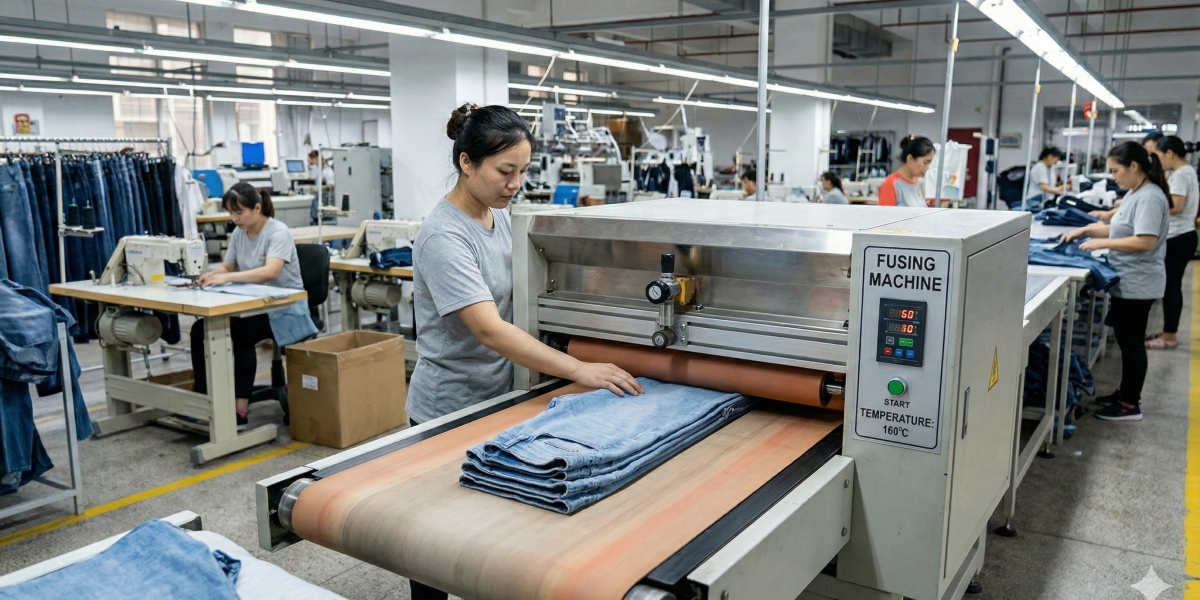

A fusing machine is a critical piece of equipment in the garment and textile industry used to bond interlining fabric to outer fabric using heat and pressure. This process enhances shape retention, structure, and durability in garments such as shirts, suits, collars, cuffs, and waistbands.
Without proper fusing, garments lose stiffness, wrinkle easily, and fail quality inspections. Modern apparel manufacturing depends heavily on accurate temperature control, pressure regulation, and dwell time to achieve consistent bonding. Understanding how a fusing machine works and selecting the right type directly impacts product quality and production efficiency.
What Is a Fusing Machine?
A fusing machine is a heat-press system that applies controlled temperature, pressure, and time to attach fusible interlining to fabric. The adhesive resin on the interlining melts under heat and bonds with the main fabric surface.
In industrial settings, this process is automated through conveyor belt systems. The result is uniform adhesion across the fabric panel, eliminating bubbling, delamination, or weak bonding areas.
How a Fusing Machine Works
1. Heat Application
The machine heats the fabric to a specific temperature range, typically between 120°C to 180°C depending on fabric type and adhesive resin. Proper heat activation ensures the resin melts evenly without scorching the fabric.
2. Pressure Control
Pressure ensures full contact between interlining and outer fabric. Inconsistent pressure causes partial bonding, leading to peeling or bubbling after washing.
3. Dwell Time
Dwell time refers to how long the fabric stays under heat and pressure. Conveyor speed determines this duration in continuous fusing machines. Correct timing ensures proper adhesive penetration into fabric fibers.
Types of Fusing Machines
1. Continuous Fusing Machine
This is the most widely used industrial type. It uses a conveyor belt system for high-volume production. Temperature and speed are digitally controlled for precision.
Best suited for: Shirt factories, suit manufacturing, mass production units.
2. Flatbed Fusing Machine
Operates with a flat heat plate and manual loading system. Suitable for small-scale production or sampling units.
Best suited for: Tailoring shops, boutique production.
3. High-Pressure Fusing Machine
Designed for heavy fabrics like denim, coats, and jackets. Provides stronger bonding force for thick materials.
Best suited for: Outerwear and heavy garment production.
4. Roller Fusing Machine
Uses rotating rollers for even heat distribution. Offers better surface smoothness and bonding consistency.
Best suited for: Precision garment finishing.
Key Components of a Fusing Machine
Heating plates or rollers
Conveyor belt (Teflon-coated)
Temperature control system
Pressure adjustment mechanism
Speed controller
Cooling zone (in advanced models)
Each component plays a role in achieving uniform bonding. High-quality Teflon belts prevent adhesive sticking and fabric damage.
Applications of Fusing Machines in Different Industries
Garment Industry
Used for collars, cuffs, plackets, waistbands, and jacket fronts. Structured garments rely heavily on accurate fusing.
Textile Manufacturing
Applied in decorative fabrics, uniforms, and workwear to enhance fabric strength and shape retention.
Footwear Production
Certain shoe components require fused reinforcements for durability and form stability.
Automotive Textile
Seat covers and interior textile components use fusing technology for layered fabric bonding.
Choosing the Right Fusing Machine
When selecting a fusing machine, consider:
Production capacity requirements
Fabric thickness and type
Interlining adhesive compatibility
Energy consumption
Digital control precision
Maintenance accessibility
High-output factories benefit from continuous conveyor systems, while smaller operations may choose flatbed options to reduce cost.
Examples of Practical Use
Example 1: Shirt Manufacturing Unit
A factory producing 5,000 shirts daily uses a continuous fusing machine set at 155°C with a dwell time of 12 seconds. This ensures collar stiffness and long-lasting shape retention.
Example 2: Jacket Production Line
Heavy wool jackets require high-pressure fusing at 170°C. Without adequate pressure, interlining detaches after dry cleaning.
Example 3: Boutique Designer Studio
A flatbed fusing machine is used for small batches where precise temperature adjustments are needed for delicate fabrics like silk.
Expert Tips for Optimal Fusing Results
Pre-test fabric and interlining combinations before bulk production.
Regularly clean the conveyor belt to prevent adhesive buildup.
Monitor temperature with external thermometers for accuracy verification.
Avoid overfusing; excessive heat weakens fabric fibers.
Maintain consistent humidity levels in the production area.
Common Mistakes to Avoid
Using incorrect temperature settings for synthetic fabrics.
Ignoring pressure calibration, leading to uneven bonding.
Running fabrics too quickly through the conveyor system.
Skipping routine maintenance checks.
Mixing incompatible interlining and fabric types.
These mistakes reduce garment durability and increase rejection rates.
Maintenance and Care
Routine maintenance ensures machine longevity and consistent performance. Clean heating elements weekly, inspect pressure rollers monthly, and replace worn belts immediately.
Calibration checks should be performed periodically to maintain accurate temperature and pressure readings. Preventive maintenance reduces downtime and improves production efficiency.
Conclusion: Why Investing in the Right Fusing Machine Matters
A fusing machine is not just a heat press—it is a precision bonding system that determines garment structure, durability, and final appearance. Accurate control of heat, pressure, and dwell time ensures professional-grade results in every production cycle.
Choosing the correct type, maintaining it properly, and training operators effectively leads to higher productivity and reduced material waste. In competitive apparel manufacturing, quality bonding is a defining standard.
Top 5 SEO FAQs About Fusing Machines
1. What is a fusing machine used for?
It is used to bond interlining fabric to outer fabric using heat and pressure in garment manufacturing.
2. What temperature is used in a fusing machine?
Most fabrics require temperatures between 120°C and 180°C depending on adhesive and material type.
3. What causes bubbling after fusing?
Incorrect temperature, insufficient pressure, or inadequate dwell time can cause bubbling.
4. How long does fusing take?
Dwell time typically ranges from 10 to 20 seconds in industrial conveyor systems.
5. Can delicate fabrics be fused?
Yes, but they require lower temperature settings and precise pressure control to avoid damage.