
Removing Color Tattoos: Which Lasers Work Best for Blue and Green Ink?
For many years, blue and green pigments were considered the "difficult children" of the tattoo world, often remaining as stubborn ghostly outlines long after the black ink had faded. However, for those seeking permanent tattoo removal in Riyadh(إزالة الوشم الدائم في الرياض) today, these vibrant shades are no longer an obstacle. The key to successfully erasing cool-toned inks lies in the specific wavelength of light used by the laser. Because different colors absorb different frequencies of light, using the wrong laser on a green or blue tattoo is like trying to open a lock with the wrong key—it simply won't work. In 2026, the introduction of specialized wavelengths has turned these once-permanent colors into manageable projects.
The Science of "Cool Color" Absorption
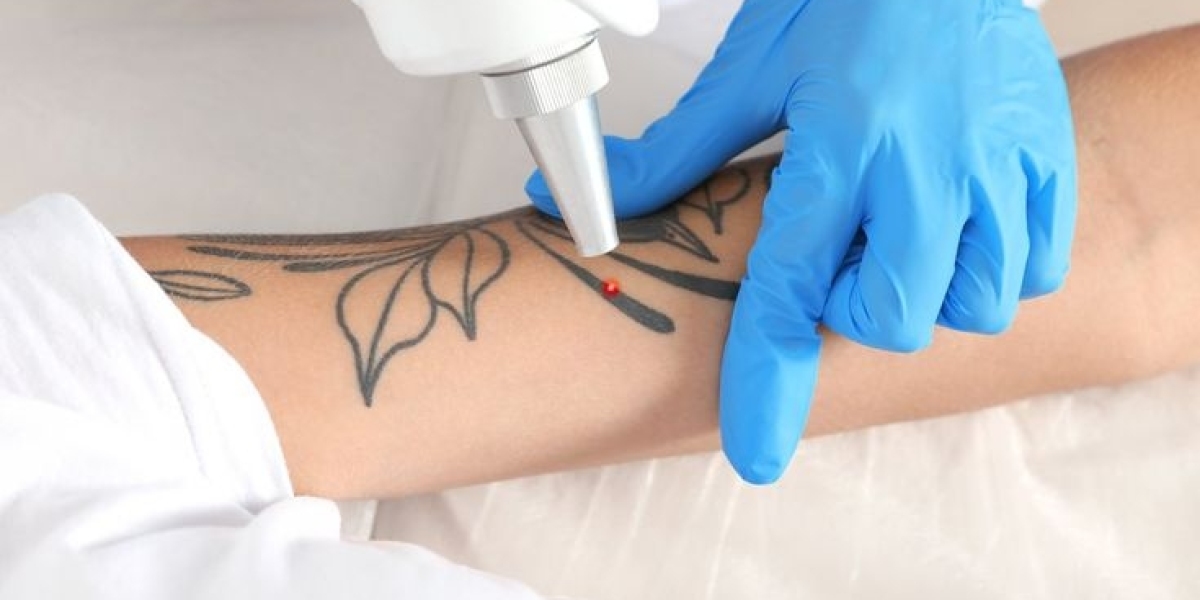
Tattoo removal works because the laser light is absorbed by the ink, which then shatters. Black ink is the easiest to treat because it absorbs all laser wavelengths (all colors of light). Blue and green, however, are highly reflective and only absorb specific, narrow bands of the light spectrum.
To effectively target these colors, a laser must operate in the red to near-infrared spectrum. When the correct wavelength hits a blue or green particle, the energy is absorbed instantly, creating a microscopic "explosion" that breaks the pigment into a fine dust without damaging the skin that doesn't contain that color.
The Top Laser Contenders for Blue and Green
If you have a colorful piece, your specialist in Riyadh will likely utilize one of the following three specialized technologies:
1. The 755nm Alexandrite Laser (The Gold Standard)
The 755nm wavelength is widely considered the most effective for green ink. It is the primary wavelength used by the PicoSure system.
Why it works: This specific frequency is "sucked up" by green and teal pigments with incredible efficiency.
Best for: Bright greens, turquoises, and sky blues.
2. The 730nm & 785nm Wavelengths (The New Pioneers)
Found in the latest PicoWay platforms, these wavelengths were developed specifically to bridge the gap in color removal.
The 730nm: This is a powerhouse for stubborn blue and green that has resisted other treatments. It penetrates slightly differently than the 755nm, often clearing "cloudy" blue areas faster.
The 785nm: This wavelength is excellent for deep blues and purples, providing a specialized tool for dark, "midnight" blue pigments.
3. The 694nm Ruby Laser
While an older technology, the Ruby laser remains a favorite for many dermatologists because of its extreme affinity for green and blue.
The Trade-off: While highly effective at clearing color, it is a slower "nanosecond" laser and carries a slightly higher risk of temporary skin lightening (hypopigmentation), especially on the tanned or olive skin tones common in Riyadh.
Comparing Color Clearance Efficiency
| Ink Color | Preferred Wavelength | Recommended Laser System |
| Dark Blue / Navy | 1064nm or 785nm | PicoWay / Discovery Pico |
| Royal Blue / Sky Blue | 755nm or 730nm | PicoSure / PicoWay |
| Vibrant Green / Teal | 755nm or 730nm | PicoSure / PicoWay |
| Lime Green | 755nm or 694nm | PicoSure / Ruby Laser |
Why "Picosecond" Speed is Critical for Colors
In the past, removing green and blue often required 15 or more sessions because the older "Nano" lasers primarily used heat. Color pigments, however, respond much better to the photoacoustic (pressure) shock of a "Pico" laser.
A picosecond laser hits the color pigment so fast that the ink shatters from the vibration before it even has a chance to get hot. This results in:
Cleaner Fading: The ink is broken into smaller "dust" particles rather than "pebbles," making it easier for your body to flush out.
Less Ghosting: Traditional lasers often left a faint green or blue "smudge." Pico technology is much better at achieving 100% clearance.
Fewer Sessions: What used to take two years can often be achieved in 8 to 10 months.
A Note on Skin Tone and Color Removal
In Riyadh, where many patients have Fitzpatrick Type III or IV skin (tan to light brown), color removal requires an expert hand. The wavelengths that "see" blue and green (like 755nm) are also somewhat attracted to the natural melanin in your skin.
To remove color safely without leaving a white patch behind, your clinician will often use a "test patch" and may utilize the 1064nm wavelength in early sessions to remove the bulk of the dark pigment before switching to the more color-sensitive wavelengths for the final "clean-up." This strategic approach ensures the tattoo disappears while your natural skin tone remains perfectly intact.