
Choosing marble used to be a slow and uncertain process. You would walk into a showroom, look at dozens of slabs under artificial lighting, and try to imagine how they might look in your own space. For many homeowners and designers, that guesswork often led to hesitation and second thoughts.
Today, technology has changed that experience completely. A virtual marble slab viewer allows people to preview marble slabs inside realistic room settings or even their own uploaded photos. This simple shift is helping buyers make faster and more confident decisions while giving marble businesses a powerful way to showcase their products.
What Is a Virtual Marble Slab Viewer
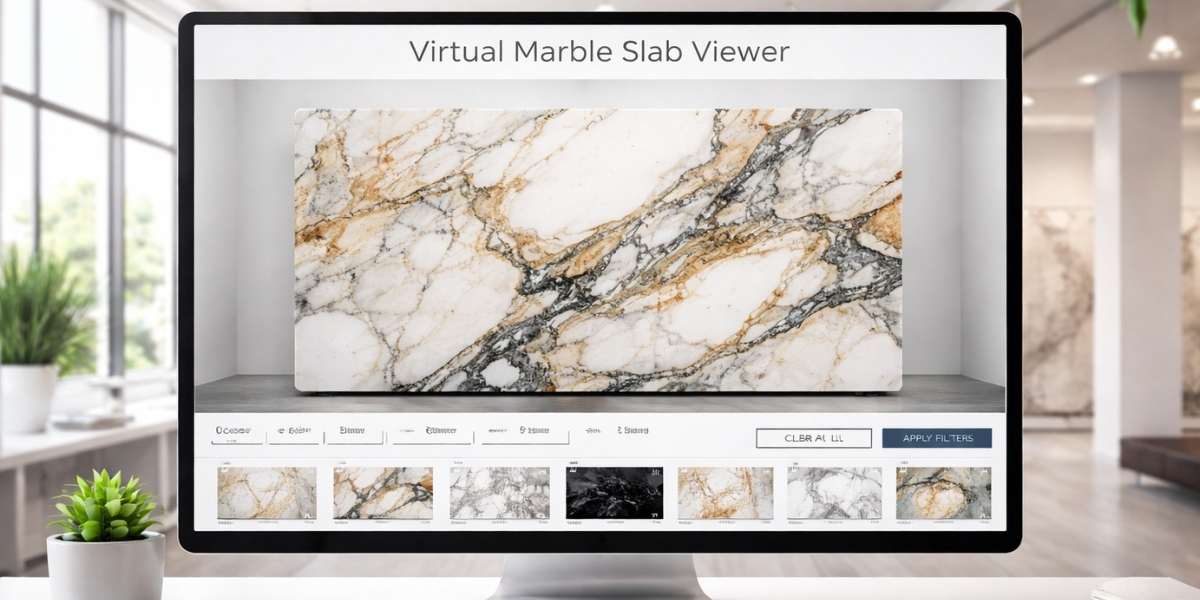
A virtual marble slab viewer is a digital visualization tool that lets users see how a marble slab will look when applied to floors, walls, countertops, or other surfaces. Instead of relying on imagination, users can select a slab and instantly view it in a lifelike environment.
These viewers typically work through web platforms or interactive kiosks. Some advanced systems even allow customers to upload images of their own rooms and apply marble slabs directly onto those photos. This makes the buying experience far more personal and realistic.
For marble manufacturers and dealers, this technology acts like a digital showroom that is open 24 hours a day. Customers can explore collections online without visiting a physical store, which expands reach and improves accessibility.
How a Virtual Marble Slab Viewer Enhances the Buying Experience
The biggest advantage of a virtual marble slab viewer is clarity. Customers can see exactly how patterns, veining, and colors interact with lighting and surrounding elements.
Imagine a homeowner choosing marble for a living room floor. Instead of guessing from a small sample piece, they can visualize the full slab across a complete room layout. This helps them understand scale, pattern flow, and overall aesthetics before making a purchase.
Interior designers also benefit from this technology. They can present multiple marble options to clients within minutes, switching styles instantly during consultations. This speeds up decision making and improves collaboration.
Another practical benefit is reduced returns and dissatisfaction. When customers know what they are getting, there are fewer surprises after installation.
Key Benefits for Marble Businesses
For marble brands and dealers, adopting a virtual marble slab viewer is not just about convenience. It directly impacts sales and customer engagement.
First, it increases buyer confidence. When customers can clearly see the final result, they are more likely to commit to a purchase. This shortens the sales cycle and improves conversion rates.
Second, it differentiates the brand. In a competitive market, offering advanced visualization tools positions a company as innovative and customer focused. Platforms like Nirwana.ai have shown how digital visualization can elevate brand perception and create memorable showroom experiences.
Third, it supports remote selling. International buyers or out-of-city clients can explore collections online without traveling. This opens new markets and reduces logistical barriers.
Finally, it improves operational efficiency. Sales teams spend less time explaining possibilities and more time closing deals because the visualization speaks for itself.
Real World Applications of Virtual Marble Visualization
A virtual marble slab viewer is useful across many scenarios.
Retail showrooms often install interactive kiosks where customers can browse slabs and apply them to preset room templates. This creates an engaging, hands-on experience that attracts attention.
Architects and interior designers use these tools during client presentations. For example, when planning a hotel lobby renovation, designers can test different marble options and instantly show clients realistic previews.
Online marble retailers integrate viewers into their websites. Visitors can explore products from home and shortlist favorites before visiting a showroom. Some companies even allow customers to save and share their visualizations with family members or project partners.
Advanced platforms such as Nirwana.ai are pushing this further by enabling AI powered visualization that adapts marble textures to real room images with impressive accuracy.
Features to Look for in a Good Virtual Marble Slab Viewer
Not all visualization tools are created equal. When evaluating a virtual marble slab viewer, several features make a big difference.
High resolution rendering is essential. Marble is all about detail, and the viewer must preserve natural textures and veining patterns.
User friendly controls matter just as much. Customers should be able to switch slabs, rotate patterns, and adjust views without technical knowledge.
Lighting simulation is another important feature. Different lighting conditions can dramatically change how marble appears. A good viewer allows users to preview slabs under various lighting setups.
Compatibility with mobile devices is also key. Many buyers explore products on smartphones or tablets, so the experience should remain smooth across screens.
Integration capabilities are valuable for businesses. A viewer that connects easily with websites, digital catalogs, or showroom displays creates a seamless ecosystem.
The Future of Marble Shopping
As digital tools continue to evolve, the virtual marble slab viewer is becoming a standard feature rather than a luxury. Buyers increasingly expect interactive experiences when researching high value purchases.
Artificial intelligence and augmented reality are likely to push this technology even further. Soon, customers may walk through their homes with mobile devices and see marble installations in real time. This level of immersion will transform how materials are selected and purchased.
For marble brands, early adoption offers a clear competitive advantage. Companies that invest in visualization now are positioning themselves at the forefront of a more digital and customer centric industry.
Conclusion
A virtual marble slab viewer is reshaping how people choose marble by removing guesswork and adding confidence. It benefits customers through clarity and convenience while helping businesses increase engagement and sales. As visualization technology continues to improve, it will play an even bigger role in the future of material selection.
If you are exploring ways to modernize your marble buying or selling experience, adopting a virtual viewer is a practical and forward thinking step. Tools like those offered by Nirwana.ai show how digital innovation can bring marble collections to life and make decisions easier for everyone involved.