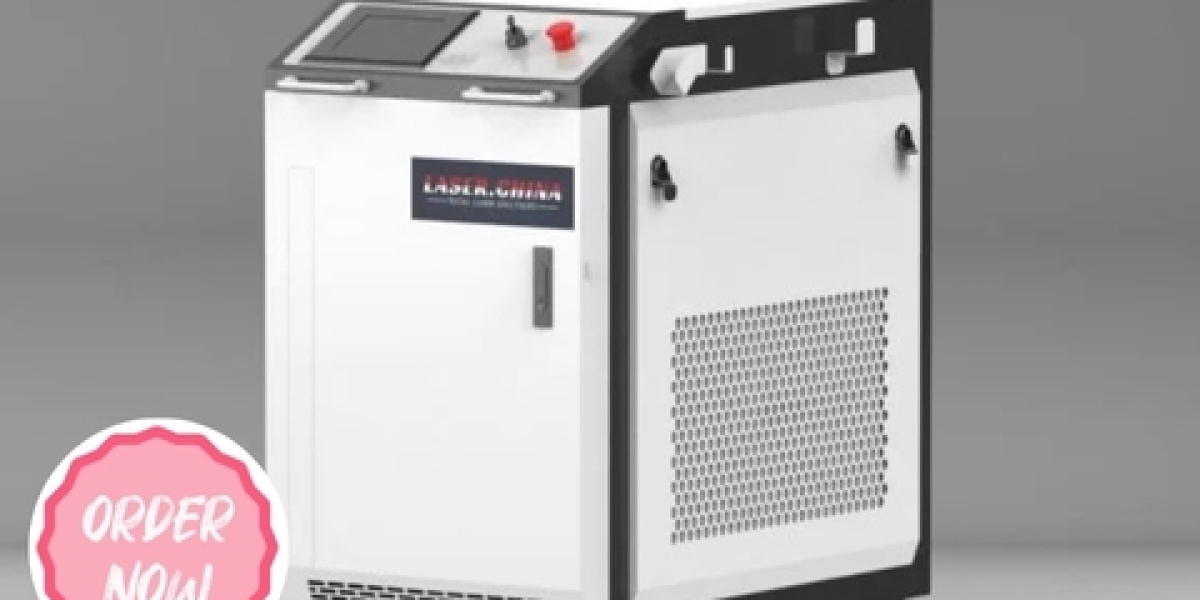

In the fast-evolving landscape of modern manufacturing, the industrial laser cleaner has become a transformative tool across multiple sectors. From automotive assembly lines to aerospace maintenance, from electronics production to heavy machinery refurbishment, industries are increasingly adopting laser cleaning technology for its efficiency, precision, and adaptability. Unlike traditional cleaning methods, which often involve abrasive chemicals, solvents, or mechanical techniques, an industrial laser cleaner uses highly concentrated laser beams to remove contaminants, rust, coatings, and other surface impurities with remarkable precision. This ensures that materials are prepared or restored without altering their structural integrity or quality.
Laser cleaning operates on a principle of controlled energy delivery. The laser emits light at a specific wavelength and intensity, targeting the undesired layer on the surface. This energy rapidly heats and vaporizes contaminants, leaving the underlying material intact. This process is highly controllable, allowing operators to adjust parameters based on the type of material, thickness of contamination, and the surface’s sensitivity. Metals such as steel, aluminum, copper, and titanium respond exceptionally well to laser cleaning, making it a popular choice for industries where surface quality directly impacts performance and reliability.
The adoption of an industrial laser cleaner also reflects broader trends in industrial automation and smart manufacturing. Many machines are now integrated with robotic arms, CNC systems, or automated conveyor lines to perform cleaning tasks with minimal human intervention. This not only increases efficiency but also ensures repeatability, precision, and safety in environments that may involve hazardous substances or hard-to-reach areas. In addition, laser cleaning does not require water, harsh chemicals, or abrasive materials, which reduces environmental impact and supports sustainability initiatives in industrial operations.
Surface preparation is another critical application of the industrial laser cleaner. In metal fabrication and welding, for instance, ensuring a contaminant-free surface is crucial for achieving strong, reliable welds. Oxides, oils, and residues can compromise the adhesion of coatings or the quality of weld joints. By using laser cleaning, manufacturers can consistently achieve surfaces ready for painting, coating, or welding, improving overall production quality and minimizing post-processing issues. In addition, the precision of laser cleaning allows for selective removal. Specific areas can be targeted without affecting surrounding surfaces, which is invaluable for delicate components in electronics, medical instruments, or aerospace assemblies.
Industries such as shipbuilding, railways, and automotive maintenance also utilize industrial laser cleaners for refurbishment and maintenance. Over time, machinery and structural components accumulate rust, scale, paint layers, or other deposits that degrade performance or appearance. Traditional cleaning techniques often involve sanding, grinding, or chemical stripping, which can be labor-intensive, time-consuming, and potentially damaging. Laser cleaning offers a non-contact solution that efficiently restores surfaces to their original condition without the need for extensive manual labor or the risk of surface deformation.
The versatility of industrial laser cleaners extends to coatings and adhesive removal. In manufacturing processes where precision is key, residues of adhesives, paints, or protective coatings must be removed without damaging the underlying substrate. Laser cleaning achieves this by vaporizing the layer while preserving the base material, enabling precise and targeted surface preparation. This capability is particularly valuable in electronics manufacturing, where circuit boards and sensitive components require exacting standards of cleanliness and surface integrity.
Safety is another important consideration in industrial environments, and laser cleaning reduces exposure to hazardous chemicals and airborne particles. Since the process is dry and non-contact, it minimizes dust, fumes, and chemical runoff, creating a safer working environment for operators. In combination with automated systems and enclosed chambers, industrial laser cleaners provide a controlled and ergonomic solution for surface treatment.
Maintenance efficiency is further enhanced by the industrial laser cleaner’s adaptability. The systems are designed to operate across a variety of surfaces, shapes, and sizes, making them suitable for custom or irregular components. Large industrial parts such as molds, dies, and machinery frames can be cleaned without disassembly, saving both time and operational costs. Portable and handheld variants allow operators to reach complex or confined spaces, expanding the application range beyond standard flat or uniform surfaces.
In addition, industrial laser cleaners are designed for long-term reliability and continuous operation. Many systems feature advanced cooling, control, and beam guidance technologies that ensure consistent performance over extended periods. Integrated software solutions allow for programming, monitoring, and adjusting cleaning parameters to meet specific requirements, supporting the demands of high-volume production environments. This integration of precision hardware and intelligent control positions the industrial laser cleaner as a critical component of modern manufacturing infrastructure.
Industries that emphasize surface quality, precision, and operational efficiency continue to explore the potential of industrial laser cleaning. Its applications span surface preparation, maintenance, rust and oxide removal, paint and coating stripping, adhesive residue elimination, and even fine-tuning delicate components. By leveraging the technology’s precision and adaptability, manufacturers can optimize production processes, reduce manual labor, and ensure consistent, high-quality results across a broad range of materials and surfaces.
The continuous innovation in laser technology, from increased power output to enhanced beam control and mobility, ensures that the industrial laser cleaner remains a forward-looking solution for modern industries. As sectors like aerospace, automotive, electronics, and heavy manufacturing evolve toward smarter, cleaner, and more efficient operations, the industrial laser cleaner represents a key tool for meeting stringent quality standards while supporting productivity and operational excellence. Its ability to provide high-precision cleaning in a controlled, safe, and environmentally responsible manner positions it as a cornerstone of industrial processes where surface integrity and quality cannot be compromised.
The transformative potential of industrial laser cleaners is evident not only in their current applications but also in the trajectory of industrial technology. As automation, robotics, and advanced manufacturing techniques continue to expand, laser cleaning systems will integrate further with digital manufacturing ecosystems. This integration enables real-time monitoring, remote operation, and predictive maintenance, ensuring that the cleaning process is optimized for both efficiency and output quality.
The use of an industrial laser cleaner embodies a shift toward processes that combine precision, efficiency, and sustainability. Industries that adopt this technology can achieve consistent surface quality, reduce manual labor, minimize environmental impact, and streamline production workflows. Its precision, adaptability, and integration capabilities make the industrial laser cleaner an essential tool in modern manufacturing environments, where every surface matters, and operational excellence is a top priority.