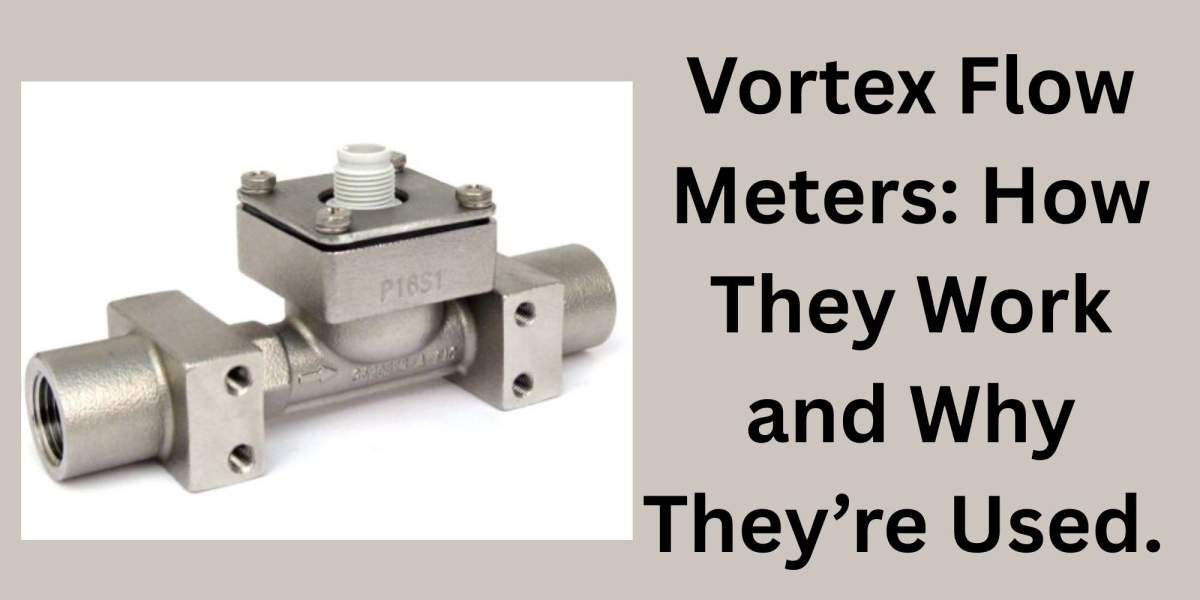

These meters determine fluid flow by detecting the vortex patterns created as liquids, gases, and steam by detecting the vortices formed as fluid flows past a bluff body. They are widely valued for their accuracy, durability, and ability to handle a broad range of fluid types under varying conditions. Their motion-free structure means they typically need far less maintenance than other types of flow meters.
These meters work well across industries because they maintain stable performance even in high-pressure and high-temperature environments. Their versatility makes them suitable for applications ranging from chemical processing to energy production, where reliable flow measurement is essential. Due to their consistency and precision, vortex flow meters have become a preferred choice in systems that demand uninterrupted and accurate monitoring.
1. The Working Principle Behind Vortex Flow Technology
The working principle of a vortex flow meter is based on the von Kármán vortex street phenomenon. When a fluid passes a bluff body placed in the flow path, alternating vortices form downstream. The frequency of these vortices is directly proportional to the fluid’s velocity, allowing the meter to calculate flow rate with high precision.
Sensors inside the meter detect the pressure fluctuations or vibrations caused by these vortices and convert the signals into readable measurements. Because the vortex frequency remains stable across a wide range of flow conditions, this technology offers excellent repeatability and reliability in industrial operations.
2. Key Components of a Vortex Flow Meter
A typical vortex flow meter includes a bluff body, a sensor assembly, and a transmitter. The bluff body is responsible for generating consistent vortices as the fluid flows past it. The sensor assembly then detects the vortex pulses and sends the information to the transmitter, which interprets and displays the flow rate.
Many modern vortex meters also incorporate advanced electronics, temperature compensation, and digital communication options. These upgrades help improve measurement accuracy and make integration into automated systems easier, especially in industries where real-time monitoring is important.
3. Types of Vortex Flow Meters and Their Variations
Vortex flow meters come in several types, including inline, insertion, and multivariable models. Inline vortex meters are built into the pipeline and offer high accuracy, while insertion types are more flexible and suited for large pipe diameters. Multivariable vortex meters combine flow, temperature, and pressure measurements in a single device.
Each type is designed to meet specific operational requirements and installation constraints. This variety allows industries to choose a model that best matches their process conditions, ensuring reliable performance in everything from steam flow measurement to chemical dosing.
4. Advantages and Limitations of Vortex Flow Meters
A major benefit of vortex flow meters is their consistent accuracy across varying flow speeds and temperature conditions. They also provide long-term reliability because they lack moving parts that can wear out. Their compatibility with liquids, gases, and steam makes them one of the most versatile flow measurement tools available.
However, vortex meters do have limitations. They require a stable flow profile and proper installation, including sufficient straight pipe lengths upstream and downstream. They may also be less effective with highly viscous fluids or fluids containing large amounts of particulates, as these can disrupt vortex formation.
5. Common Industrial Applications and Use Cases
Vortex flow meters are widely used in power plants for steam measurement because they can withstand high temperatures and pressures. In the oil and gas industry, they help monitor the flow of fuel, natural gas, and other process fluids with reliable precision. Their resilience makes them ideal for demanding environments where accuracy is critical.
They are also used in chemical processing, HVAC systems, water treatment facilities, and food manufacturing. Their ability to measure multiple types of media allows industries to standardise on a single technology for various applications, simplifying maintenance and improving operational efficiency.
6. Factors to Consider When Choosing a Vortex Flow Meter
When selecting a vortex flow meter, factors such as fluid type, temperature, pressure, and pipe size must be considered. Ensuring proper installation space for straight runs of piping helps maintain measurement accuracy. The specific application—whether steam, liquid, or gas—also determines the best meter type.
Other considerations include digital communication needs, environmental conditions, and industry standards. Choosing a meter that matches both operational demands and long-term performance requirements ensures accurate readings and reduces overall maintenance costs.
7. Final Thoughts: Why Vortex Flow Meters Remain a Reliable Choice
Vortex flow meters remain a trusted option in industrial settings due to their balance of accuracy, durability, and versatility. Their straightforward design and ability to measure various fluids make them practical for a wide range of applications. They offer consistent performance even under harsh operating conditions.
As technology advances, modern vortex meters now include enhanced sensors and smart diagnostics, improving reliability and ease of integration. These improvements reinforce their value as a long-term solution for industries seeking stable, accurate flow measurement.